Tomioka Eisen
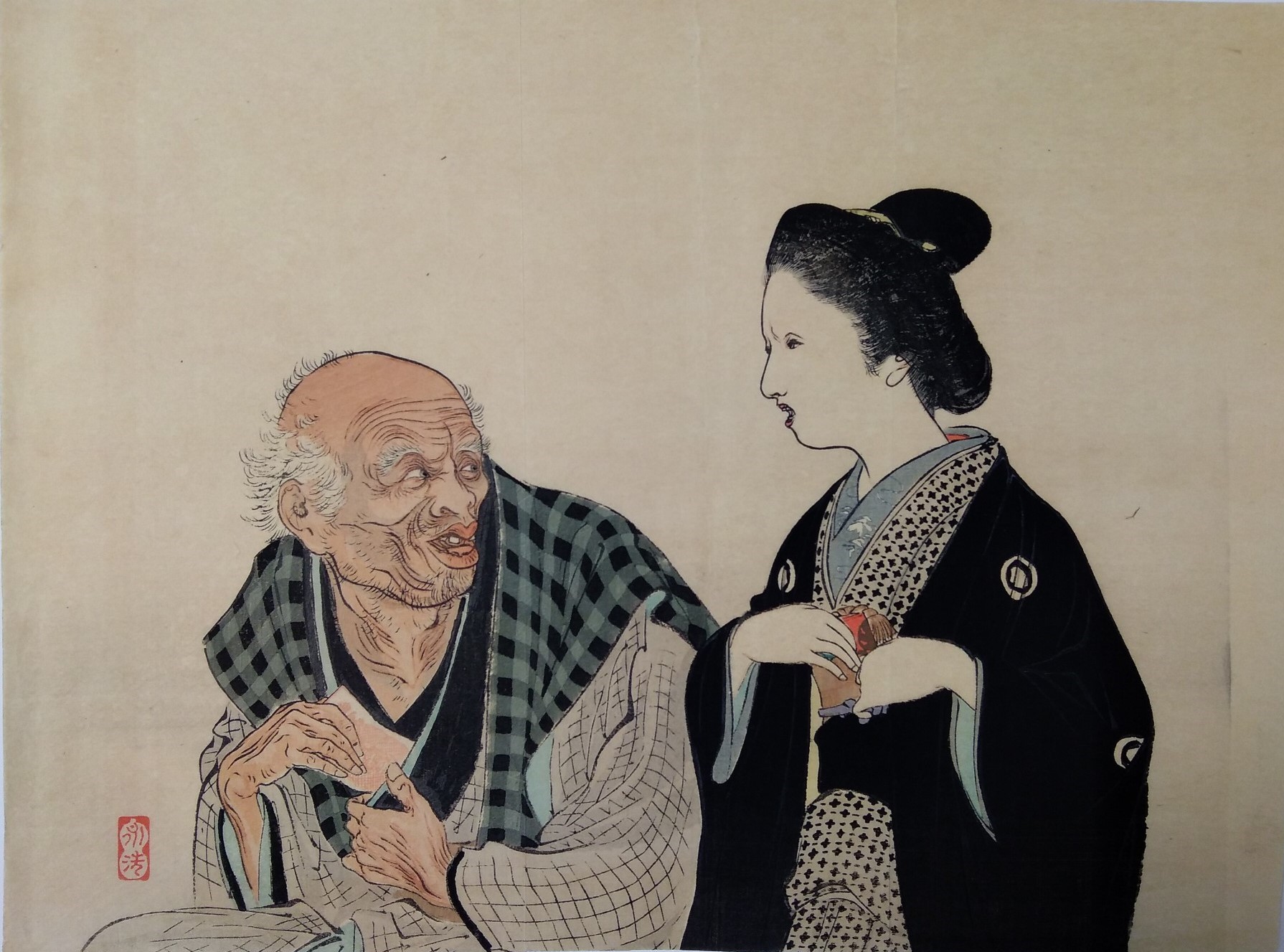
1864 ~ 1905Tomioka Eisen, born Tomioka Hidetarō in Nagano Prefecture, was the eldest son of a samurai retainer of the Matsushiro domain. Following his father`s death, he moved to Tokyo while still young and pursued a career as a draftsman.
At the age of eighteen he became a pupil of Kobayashi Eitaku, an accomplished painter trained in the Kano tradition.
While employed as a draftsman in the Army General Staff Office, Eisen continued his artistic studies and gradually shifted his attention toward painting and illustration. During the 1880s he began producing kuchi-e frontispieces under Eitaku`s guidance.
After his master`s death in 1890, Eisen established himself as an independent artist and soon became one of the most successful sashi-e illustrators of the Meiji period, contributing to major publications such as the Miyako Shinbun.
In addition to newspaper and magazine illustrations, he produced book illustrations, kuchi-e and single-sheet prints. His popularity brought him considerable commercial success. Seeking recognition as a serious painter, he later devoted increasing attention
to nihonga painting and was awarded a silver medal at the first joint exhibition of the Japan Art Institute (Nihon Bijutsuin) and the Japan Painting Association (Nihon Kaiga Kyōkai), later serving as a juror for subsequent exhibitions.
Eisen died in 1905 at the age of forty-one, just as his career as a painter was beginning to develop. Today he is especially remembered for his elegant depictions of women and for his refined kuchi-e illustrations, which capture the fashions and atmosphere of Meiji-period Japan with remarkable sensitivity.