Okuyama Gihachirō
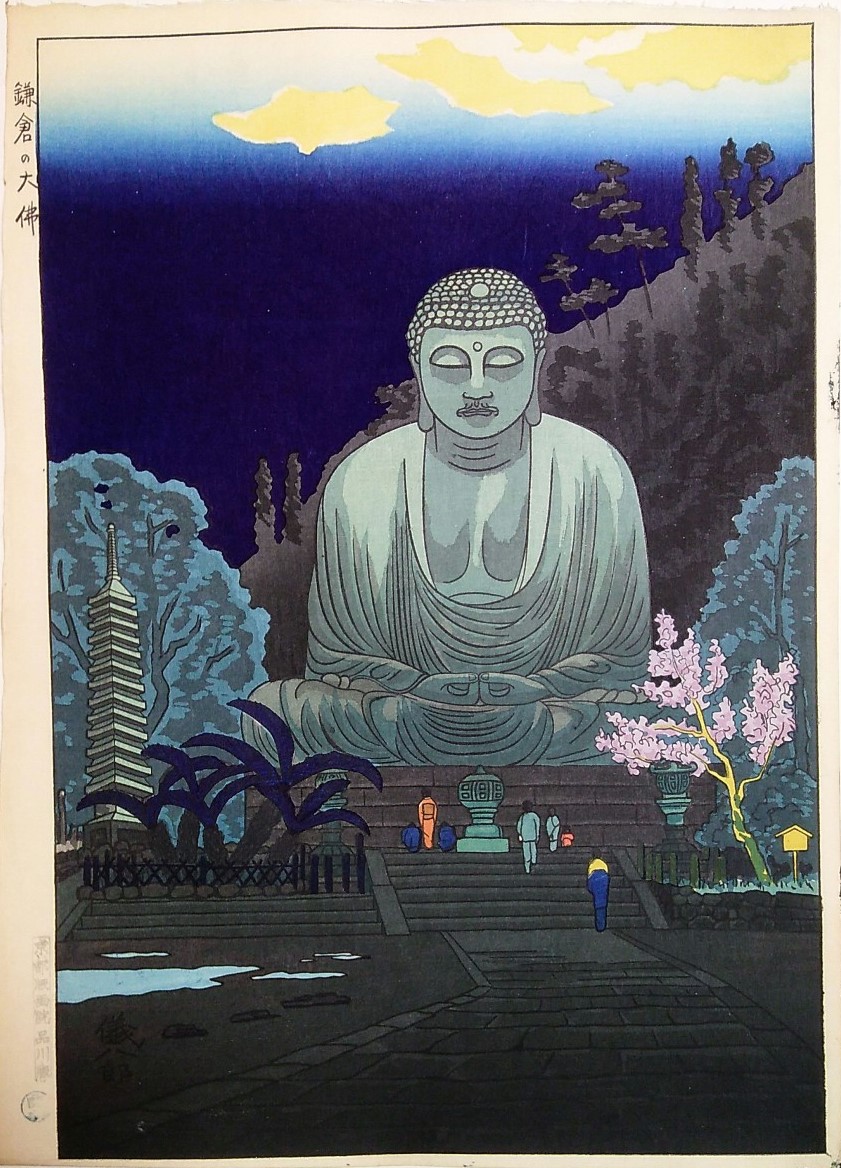
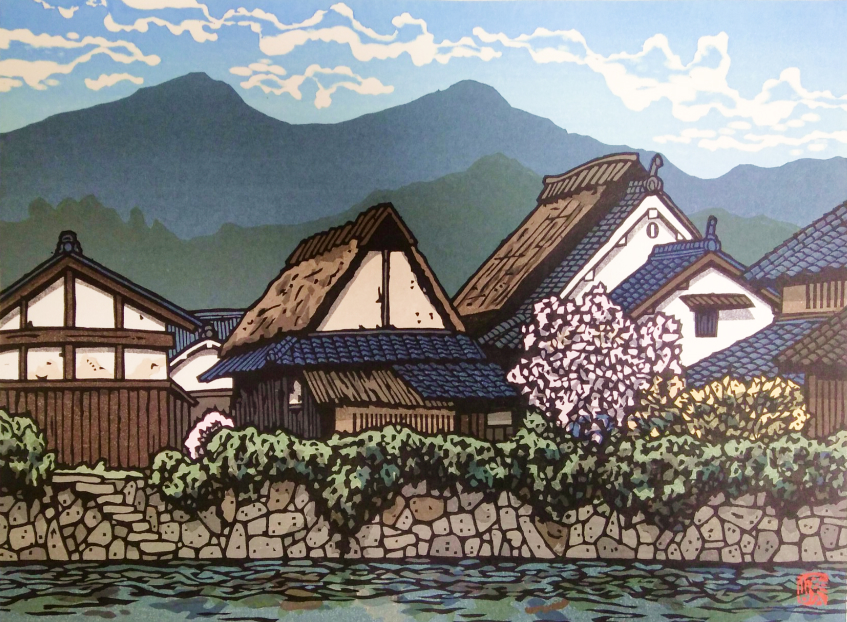
1907 ~ 1981Okuyama Gihachirō was a prominent Japanese woodblock print artist and commercial designer from Yamagata Prefecture. Active across both the Sōsaku Hanga and Shin Hanga traditions, he is also recognized as a pioneer of woodblock-printed advertising in modern Japan.
Born in Sagae on February 17, 1907, Okuyama moved to Tokyo at the age of thirteen. He initially studied printmaking largely on his own and later attended the Kawabata Painting School, where he developed his drawing skills. In 1928, his work was accepted for the first time into the exhibition
of the Japan Creative Print Association. That same year, he began producing posters and other advertising materials for Nihon Keori, commonly known as Nikke or the Japan Wool Textile Company.
In 1931, Okuyama joined Kōno Takashi and Yamana Ayao in founding the Tokyo Advertising Art Association (Tōkyō Kōkoku Bijutsu Kyōkai). He also contributed a print depicting Hongō Motomachi Park to the collaborative series One Hundred Views of New Tokyo (Shin Tōkyō Hyakkei). In 1936, he became
a disciple of Ishii Kendō, a noted scholar of Meiji culture, printing history, and ukiyo-e. Under Ishii`s guidance, Okuyama developed a strong interest in reviving traditional Japanese woodblock techniques. From 1941, he began working with professional carvers and printers while continuing to
produce self-carved works, thus moving between the principles of Shin Hanga and Sōsaku Hanga.
During the Second World War, Okuyama participated in the Japan Print Service Association (Nihon Hanga Hōkōkai), which brought printmakers together at a time when paper, pigments, woodblocks, and other materials were increasingly difficult to obtain. Immediately after the war, he founded the Japan
Print Institute (Nihon Hanga Kenkyūjo), active from approximately 1945 to 1952. The institute produced reproductions of ukiyo-e masterpieces as well as woodblock interpretations of works by Japanese and Western artists.
In 1954, Okuyama settled in Shimoyakiri, Matsudo, where he established his home and workshop. There he continued to produce original landscape prints, commercial designs, and reproductions of both Eastern and Western artworks.
In 1965, Okuyama helped promote the construction of a literary monument at Sairenji Temple commemorating Itō Sachio`s novel The Wild Chrysanthemum`s Grave (Nogiku no Haka), which is set in the surrounding Yakiri countryside. The monument was erected through the efforts of local supporters, with its
inscription written by the poet Tsuchiya Bunmei. Okuyama maintained a close relationship with the temple, where a selection of his prints has subsequently been displayed.