
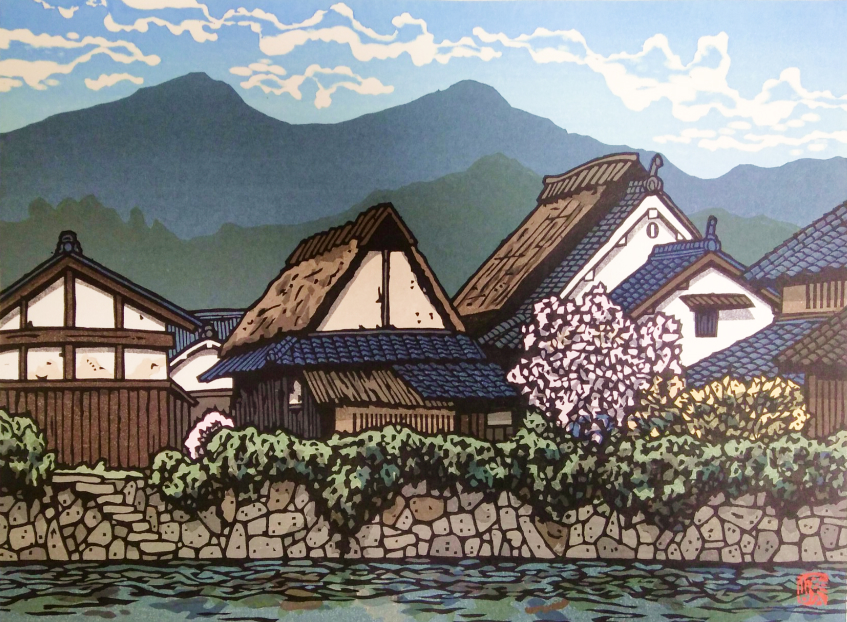
Utagawa Hirosada
1810 ~ 1864Utagawa Hirosada, also known as Konishi Hirosada, was one of the most important and prolific woodblock print artists active in Ōsaka during the late Edo period.
He is generally regarded as a pupil of Utagawa Kunimasu, a leading figure of Osaka printmaking and a member of the Utagawa school.
Little is known about the details of his early life. Before 1847, he worked under the artistic name Hirokuni, later adopting the name Hirosada, by which he is best known today.
In 1852, he traveled to Edo together with fellow Osaka artists Kunimasu and Sadayoshi, contributing landscape backgrounds and design elements to collaborative projects associated
with Utagawa Kunisada, one of the most influential ukiyo-e artists of the period.
Hirosada specialized in yakusha-e (actor prints), producing an estimated 800 works, primarily in the chūban format. He became especially renowned for his expressive ōkubi-e (large-head portraits),
which captured the distinctive features, emotions, and stage presence of kabuki actors with remarkable intensity. His compositions demonstrate an exceptional ability to convey both the dramatic atmosphere
of theatrical performances and the psychological depth of the characters portrayed.
Working during a period when Osaka`s print culture was flourishing, Hirosada played a central role in the development of Kamigata-e, the distinctive style of printmaking associated with the Kansai region.
His innovative approach and prolific output helped establish Osaka as an important center of theatrical print production outside Edo.
Today, Hirosada is regarded as one of the foremost masters of Osaka actor prints. His works are preserved in major international collections, including those of the British Museum, the Victoria and Albert Museum,
and the Philadelphia Museum of Art, where they continue to be admired for their artistic quality and their vivid portrayal of nineteenth-century kabuki culture.
 Sold Out
Henjō, born as Yoshimine no Munesada, was a renowned poet and Buddhist priest of the Tendai sect during the early Heian era (794 - 1185).
He is celebrated as one of the six notable waka poets, known as the Rokkasen, and is also included among the Thirty-Six Immortals of Poetry, a prestigious group of classical
Japanese poets.
Henjō`s poetry is prominently featured in the "Kokinwakashū", one of Japan`s most important anthologies of waka poetry, compiled in the early 10th century. This anthology holds
a significant place in Japanese literary history alongside the "Manyōshū", as it reflects the aesthetic and thematic preferences of the early Heian period.
Henjō`s works often explore themes of nature, love, and Buddhist philosophy, embodying the delicate and evocative style characteristic of Heian-era poetry.
His contributions to the "Kokinwakashū" and his inclusion in the Rokkasen and Thirty-Six Immortals of Poetry underscore his enduring influence on Japanese literature and cultural heritage.
Sold Out
 Sold Out
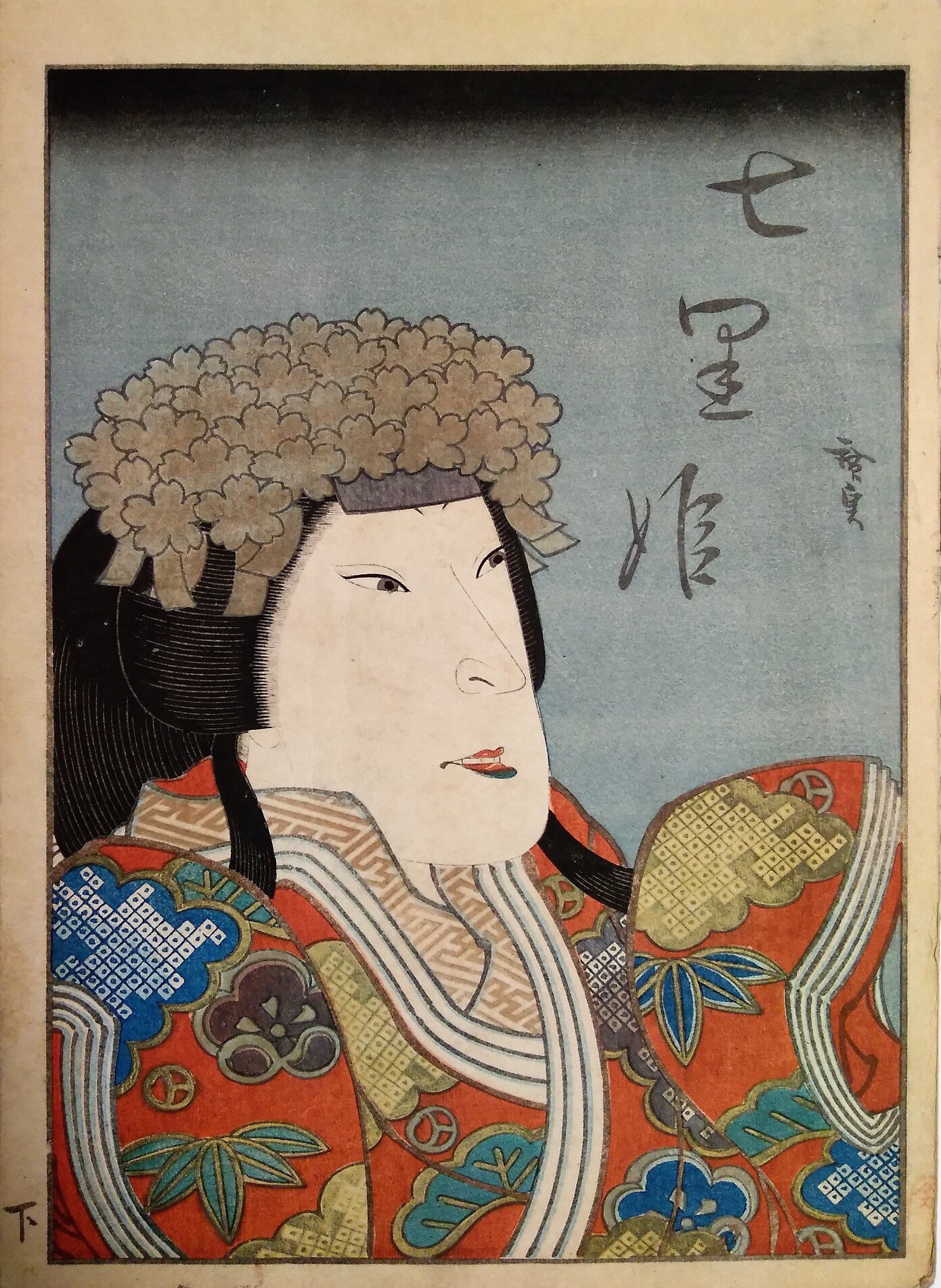
The kabuki actor Nakayama Nanshi playing as onnagata the female role of Nanazato hime, from the drama Nichiren Shōnin Minori no Umi.The print is the second one from a diptych and it can be understood by the presence of the japanese character shitain the lower left side of it. On the opposite side the publisher seal has been applied in red.
Sold Out
 Sold Out
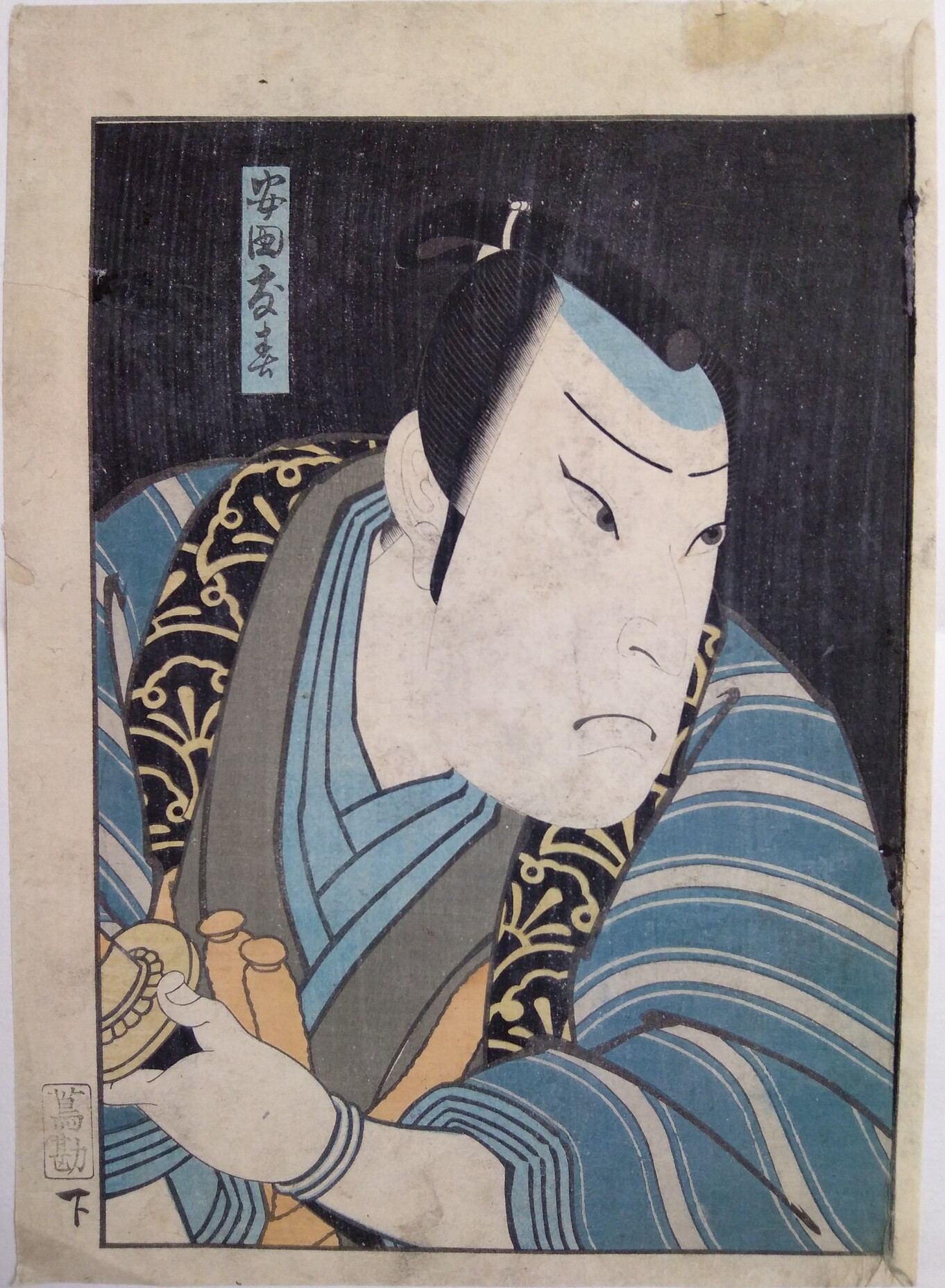
This print shows the actor Kataoka Gado II as Yasuda Tomoharu, a character from the Noh theatre drama Mochitsuki (望月).
Information about this version of the print are scarce. It actually doesn`t show anywhere the sign of the artist, but having another identical print Hirosada`s sign on the left side
of the blue cartouche containing the character name it may be reasonable to consider this one an edition released soon after the first one.
A black seal on the lower left corner (蔦勘, Tsutakan) should suggest us the publisher name, different, however, from the one Hirosada used to work with, named Kinkadō (金華堂).
Sold Out
 Sold Out
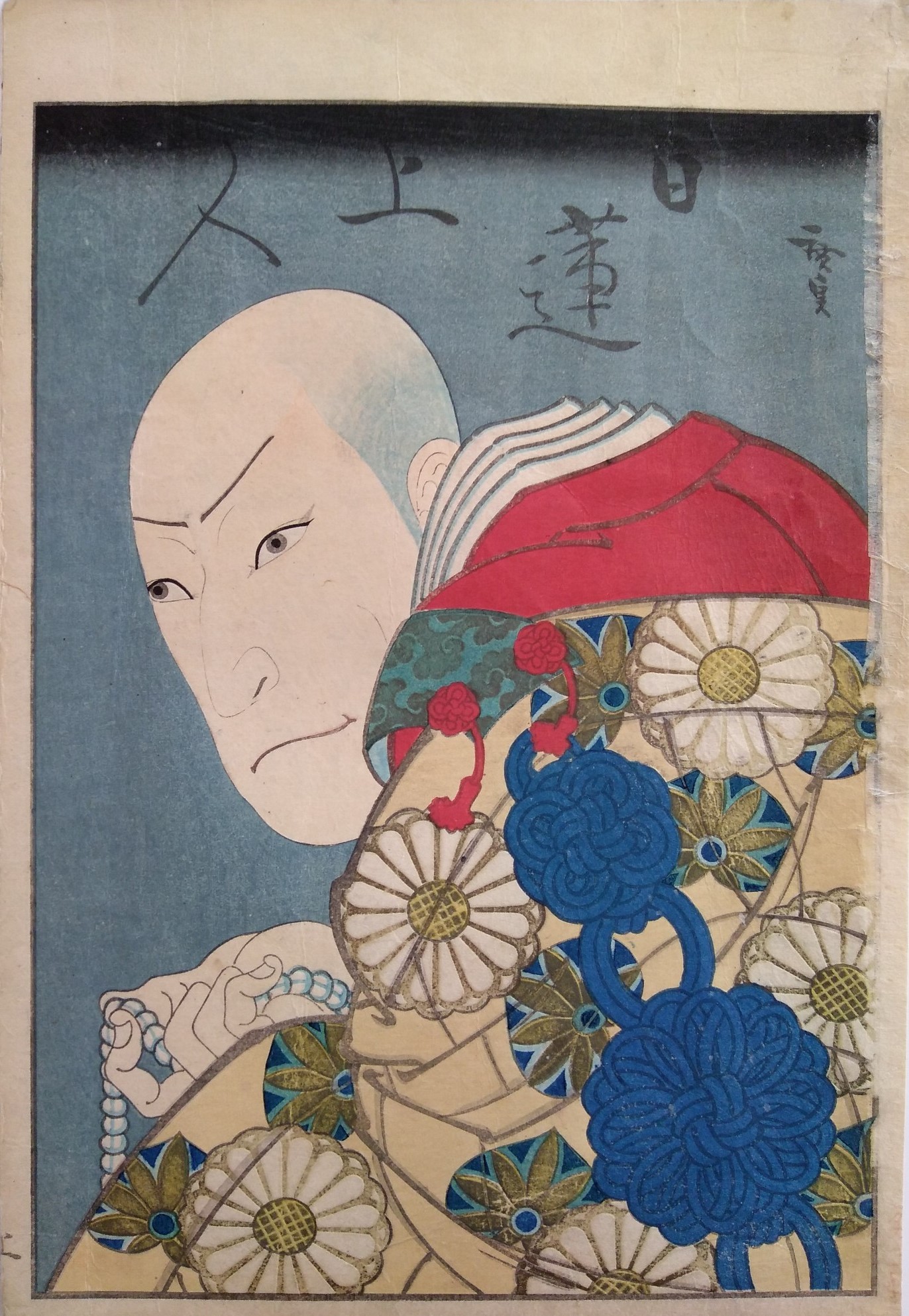
A print portraying the kabuki actor Jitsukawa Enzaburō playing the role of Nichiren from the drama Nichiren Shōnin Minori no Umi. The print is the first one from a diptych and it can be understood by the presence of the character "ue" (上) that slightly appears from left side of it.
Sold Out
 Sold Out