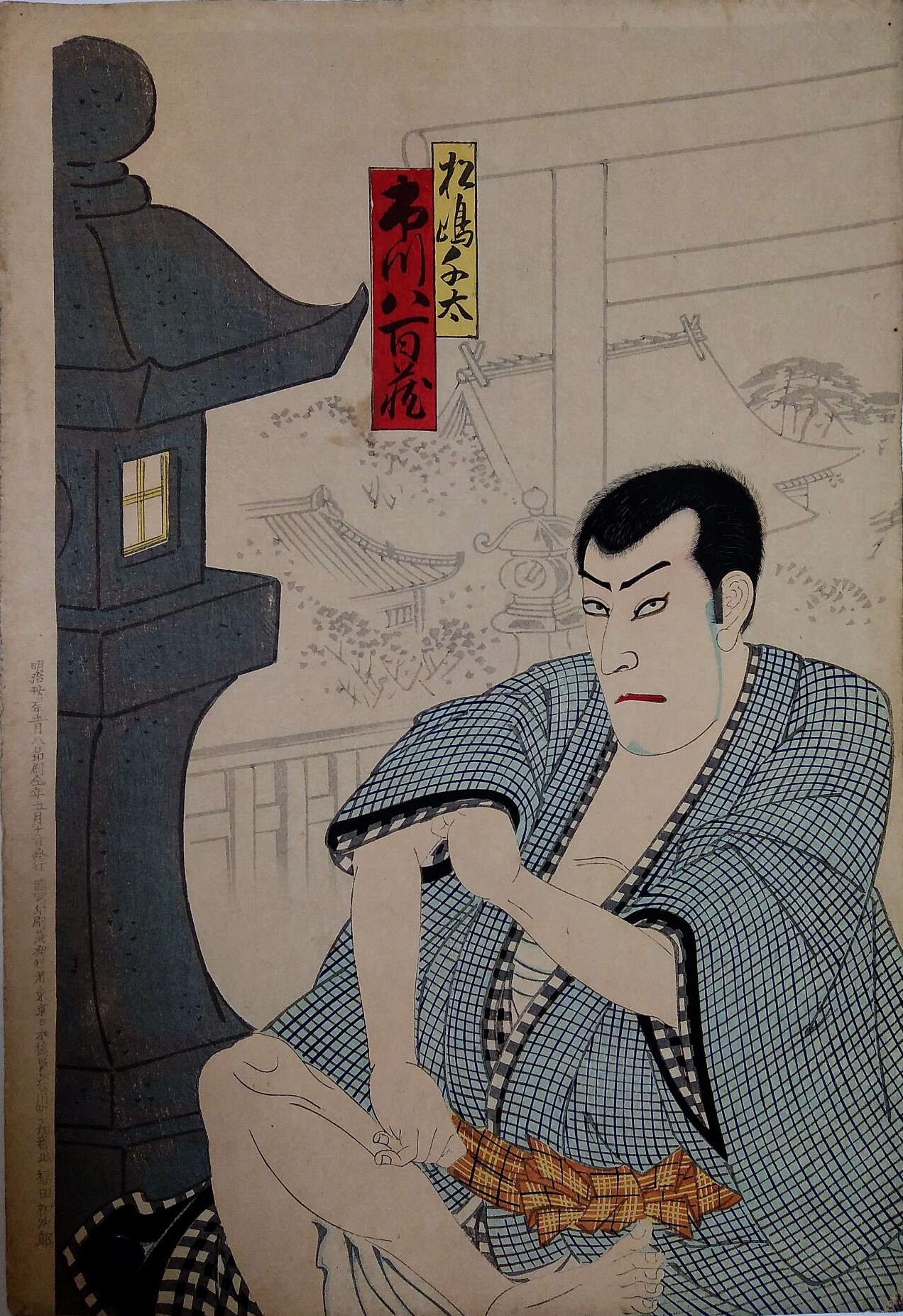
Utagawa Kunisada III
1848 ~ 1920Utagawa Kunisada III, born in Edo as Takeuchi Eikyū, was a prominent ukiyo-e artist active from the closing years of the Edo period through the Meiji era.
He is best known for his kabuki actor prints and depictions of the customs and rapid modernization of Meiji-period Japan. In 1858, while still a child, he entered the studio
of Utagawa Toyokuni III, better known as Kunisada I. Following his master`s death, he continued his training under Kunisada II, later known as Toyokuni IV.
He initially worked under the name Kunimasa IV before succeeding to the name Kunisada III in 1889. He used several other art names during his career, including Kōchōrō, Baidō,
and, from around 1891, Toyosai. He is also sometimes identified as Toyokuni V, although the numbering of the later Toyokuni successors varies among sources.
Kunisada III produced numerous yakusha-e and became one of the most prominent designers of kabuki actor prints in the Meiji period, second in popularity only to Toyohara Kunichika.
He was particularly admired for his portraits of Ichikawa Sadanji I and also depicted many other leading performers of the rapidly changing Meiji theatrical world. Alongside actor prints, he created bunmei kaika-e illustrating Japan’s modernization, scenes of contemporary customs, illustrated books, e-sugoroku game boards, and other popular printed works. His extensive production provides valuable visual documentation of both Meiji-period kabuki and the transformation of Japanese urban society.
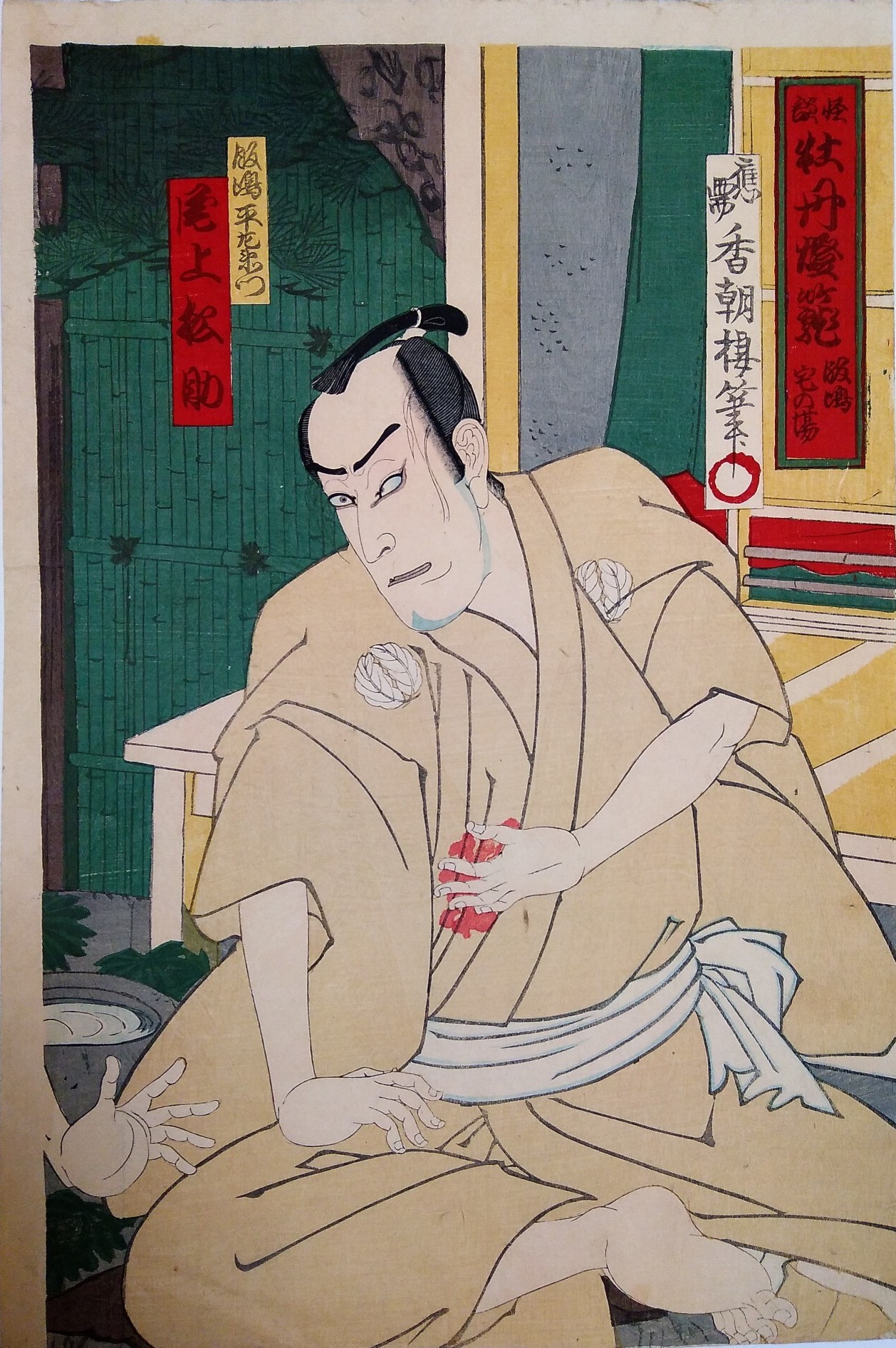
This print shows the kabuki actor Onoe Matsusuke IV as Iijima Eizaemon in a scene taken from the drama Kaidan botan dōrō. It belongs to a triptych of which it occupies the first place from the left side.
USD$ 115.00
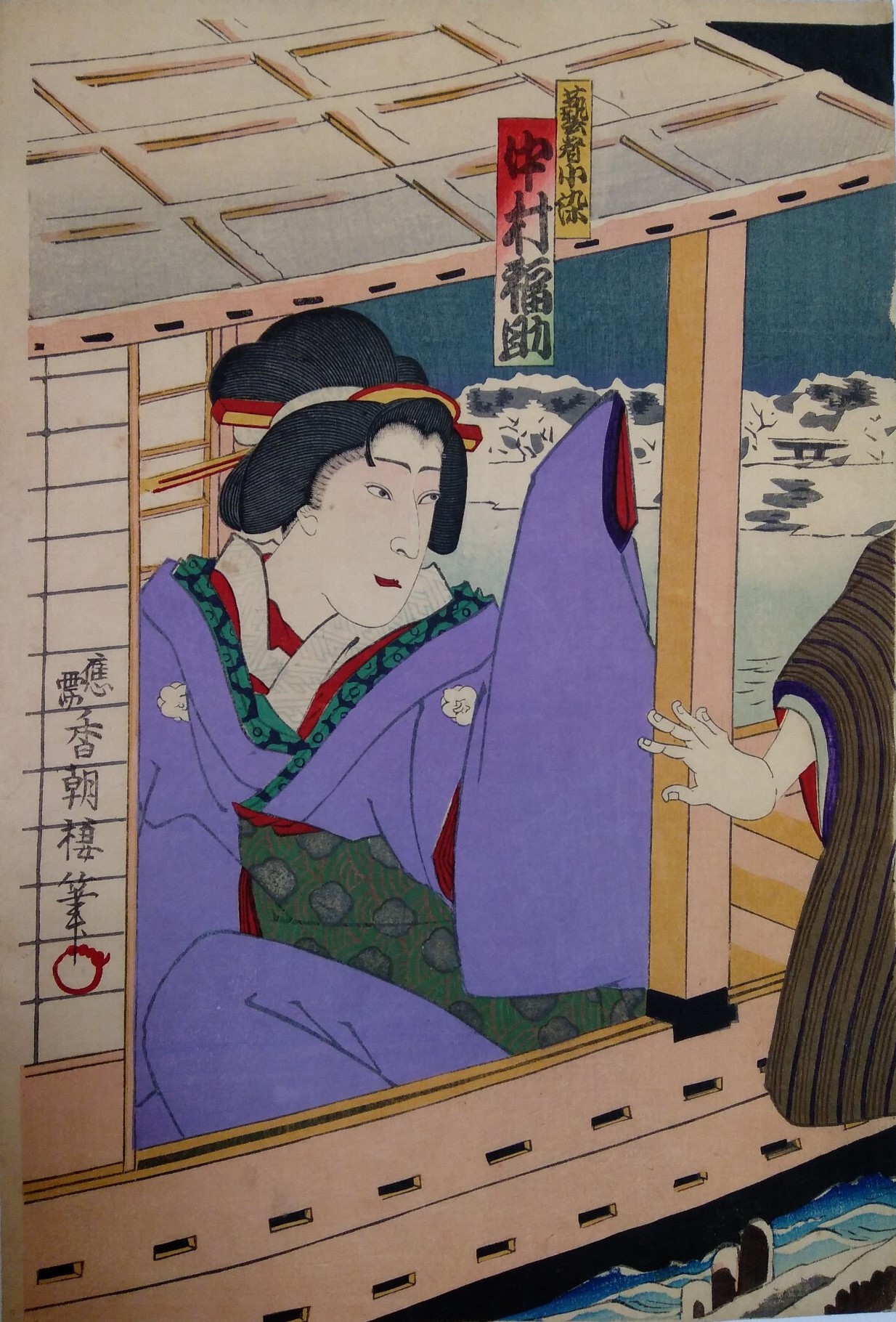
This print comes from a triptych inspired by the drama "Three Ansei sake cup" (Ansei mitsugumi sakazuki) held in Tōkyō for the first time in 1893 at the Kabuki theater and portrays the kabuki actor Nakamura Fukusuke who,
as onnagata, is playng the role of the Geisha Kotome.
Kotome was a Gesiha lived during the bakumatsu, a timeline extending from 1853 to 1867, the last 14 years of the Tokugawa Shogunate. It is told that on the 6th year of the Ansei era (1859) she was sailing from Uraga, nearby Yokohama in
the Kanagawa prefecture towards the Kamigata area (which nowadays corresponds to the area spreading from Kyōtō to Ōsaka) for visiting its beauties, but she was caught in storm. After having drifted for 60 long days she found hereself in the Hawai.
Haunted by a strong feeling of nostalgia but with no chance of returning home she had no choice but keep living there.
One day she met a Christian missionary named Jansee that took her to America where she converted devoting herself to a Chirstian life.
Voices and news about her life got lost after 1877.
USD$ 115.00