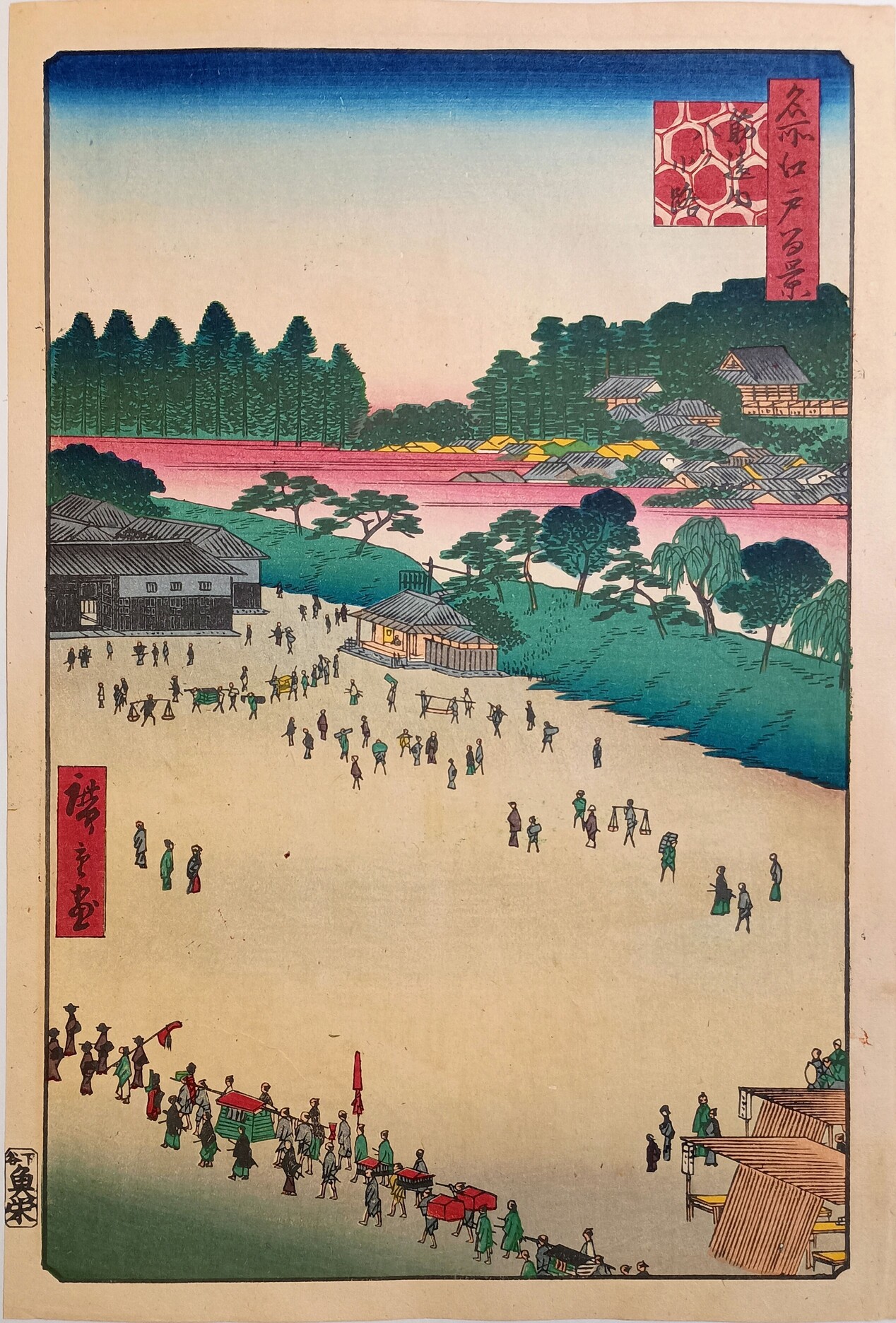
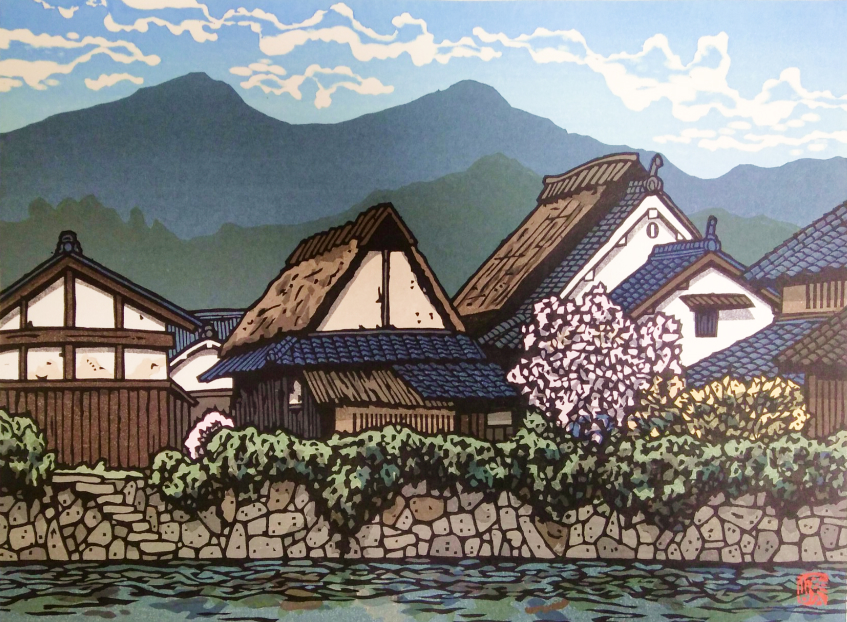
Utagawa Hiroshige
1797 ~ 1858Utagawa Hiroshige, born Andō Tokutarō in Edo (modern-day Tokyo), was one of the last great masters of ukiyo-e and remains among the most influential artists in Japanese art history.
The son of a lower-ranking samurai serving in the shogunate`s fire brigade, Hiroshige showed artistic talent from an early age and initially studied painting under Okajima Rinsai of the Kanō school.
After being unable to join the studio of Utagawa Toyokuni, he became a pupil of Utagawa Toyohiro in 1811 and received the artistic name "Hiroshige" the following year.
Although he initially designed actor prints and images of beautiful women, Hiroshige achieved lasting fame through landscape prints. His breakthrough came with The Fifty-three Stations of the Tōkaidō (1832 - 1833),
a series depicting the famous route between Edo and Kyoto. Combining poetic atmosphere, seasonal beauty, and observations of everyday life, the series established him as the leading landscape print designer of his generation.
Over the following decades, Hiroshige produced numerous celebrated series, including The Sixty-nine Stations of the Kisokaidō, Famous Views of the Sixty-odd Provinces, Thirty-six Views of Mount Fuji, and his final masterpiece, One
Hundred Famous Views of Edo. In addition to landscapes, he also created kachō-ga (bird-and-flower prints), bijin-ga (pictures of beautiful women), and yakusha-e (actor prints).
Hiroshige`s work is admired for its innovative compositions, subtle color gradations (bokashi), and remarkable ability to capture changing weather, seasons, and atmospheric effects. His prints played a major role in the development of
Japonisme in Europe and profoundly influenced Western artists such as Vincent van Gogh, Claude Monet, James McNeill Whistler, and Henri de Toulouse-Lautrec.
Hiroshige died in Edo in 1858 during the great cholera epidemic. His legacy endures through thousands of prints that transformed landscape into one of the defining subjects of ukiyo-e and introduced generations of viewers, both in Japan and abroad,
to the beauty of the Japanese countryside and urban scenery.
 Not for Sale
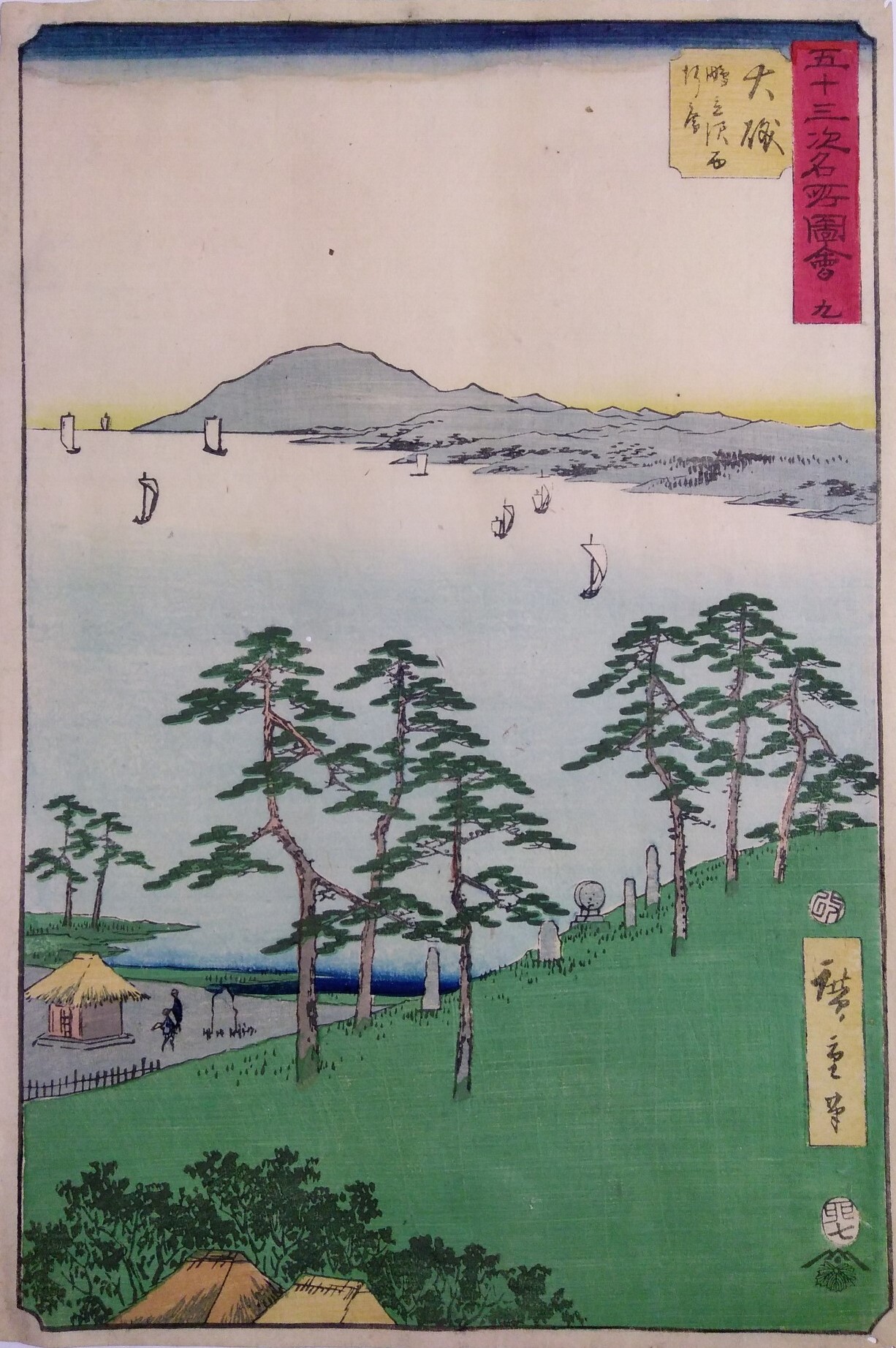
Ōiso is a town of the Kanagawa prefecture facing the Sagami bay.
In the ancient time, before the Taika reform of 645 a.d it was part of the domain controlled by the Shinagano clan.
With the introduction of the Ritsuryō reform when the Shinano clan domain was unified with the Sagamu`s one, Ōiso became part of the Yurugi district of the newly born Sagami country.
At the northeastern side of Yurugi`s boundaries broaden Ōsumi lived a community of people came from Goguryeo (Kōkuryō) one of the three kingdoms existing in the Korean peninsula by that time.
During the Nara period and Heian period a timespan which spread from 710 a.d to 1185 a.d it was the place where provincial office was established by imperial court of Kyōtō.
Thanks to the mild temperature and warm climate of the area attention towards Ōiso has been growing up in recent times as tourist and visitor more often spend time to one of its health resorts or swimming area.
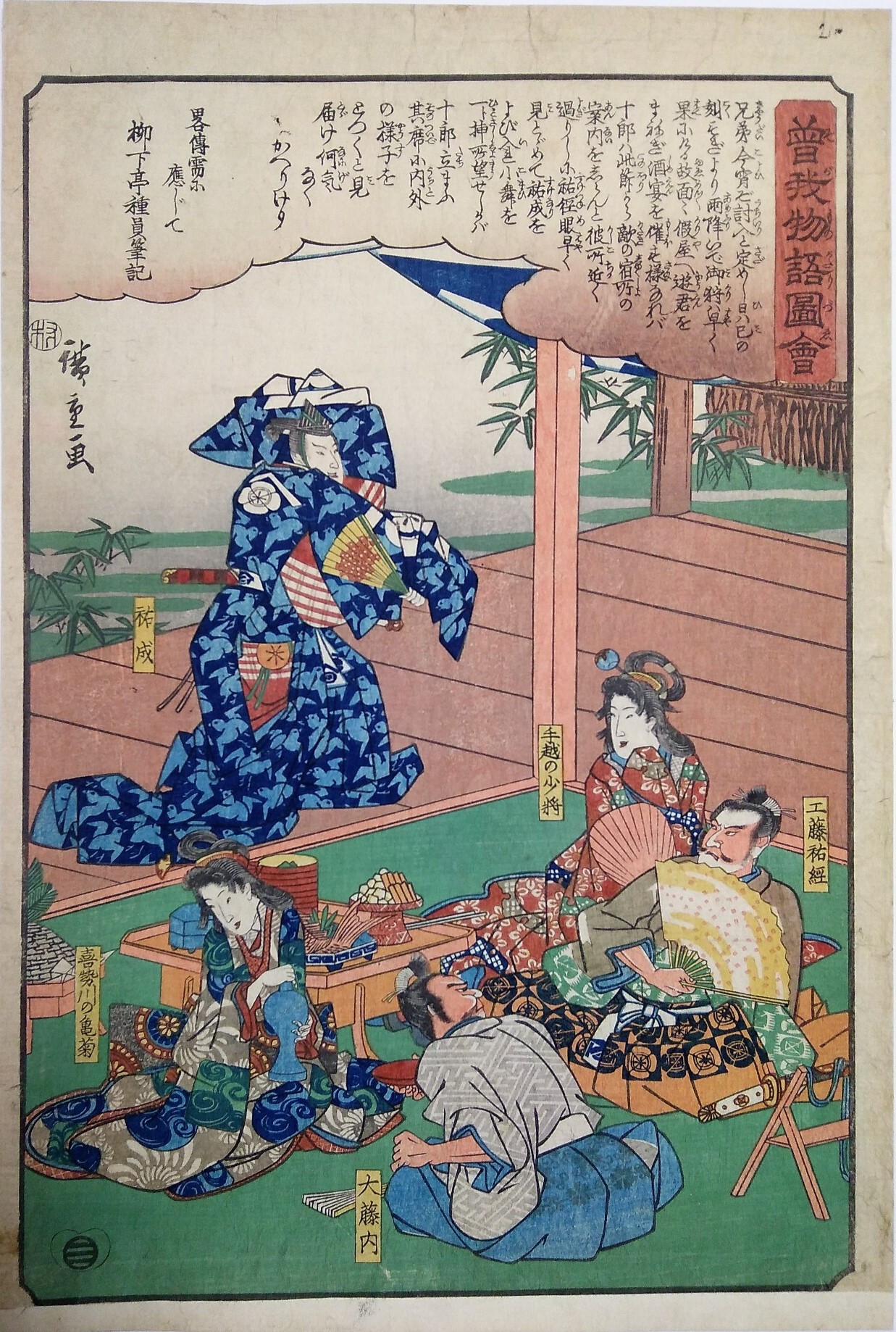
This print belongs to a collection ispired by the Tale of the Sōga, an epic war tale (gunki monogatari) which tells the story of the Sōga brothers, Sukenari and Tokimune, and their attempt to
killing Kudō Suketsune as an act of revenge for having murdered their biological father years before.
The matter happens during a sumptuos hunting event, the "Fuji no Makigari" organized by the Shōgun Minamoto no Yoritomo in 1193.
Suketsune (holding a wide yellow fan in the print) is relaxing with few guests, sitting and enjoying a meal. The older of the Sōga brother Sukenari is performing a dance for them, aiming to pleasure and entertain
Suketsune before the attack.
The other guests are (from the right): Tegoshi Shōshō: a courtesan from Tegoshiyado in Suruga, modern Shizuoka. She was Suketsune`s lover. Ōtonai: aka Ōmori Takamori, a Shintoist priest from the Kibitsuiko Shrine
Kibitsuiko jinja. Kisegawa no Kamegiku: a famous shirabyōshi dancer of the time.
USD$ 194.00
 Sold Out
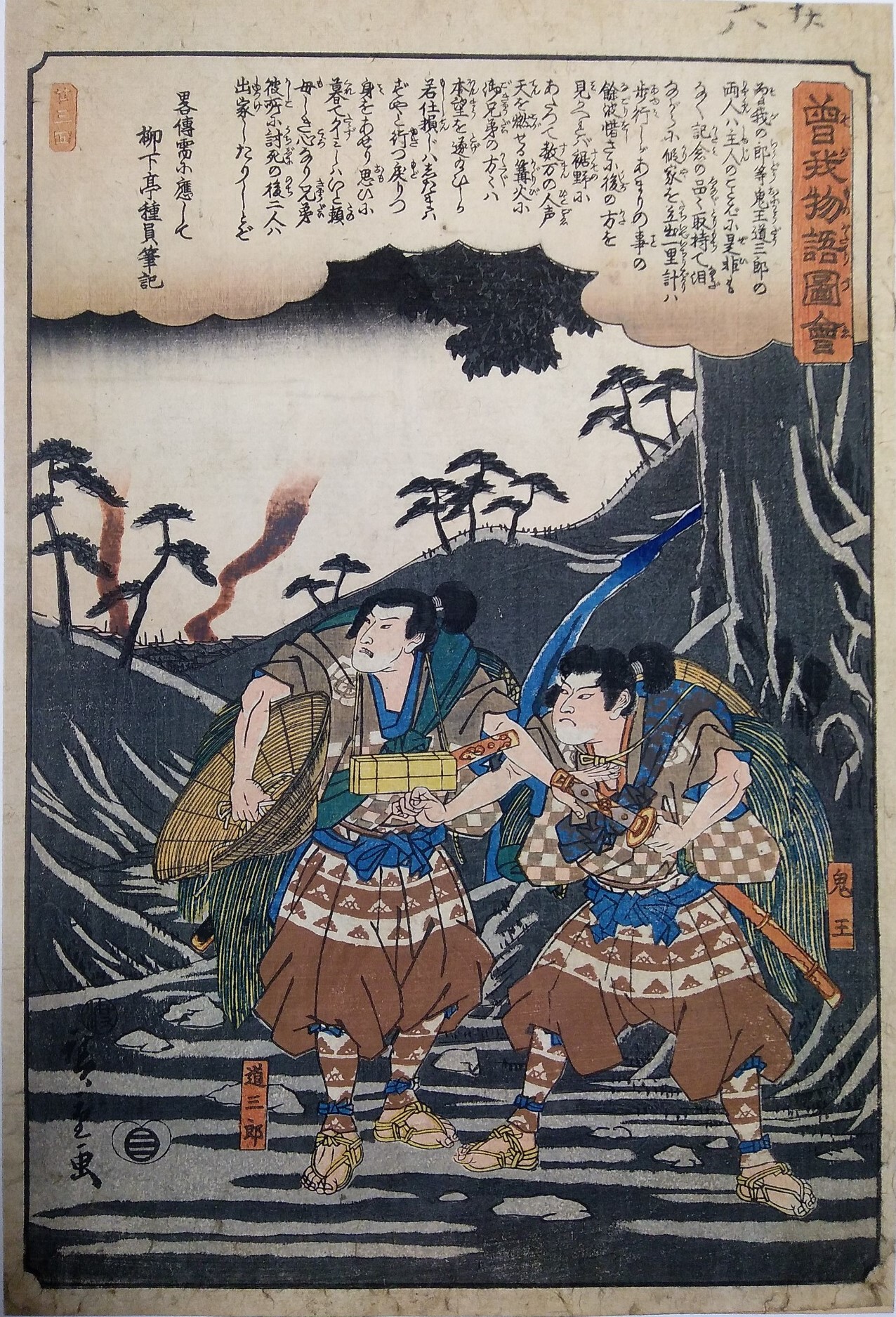
Also known by the name of Oniōmaru and Tanzaburō they enter the scene from the second half of the story, helping the Sōga brothers in their quest for revenge.
Despite costing them their own life the Sōga brothers eventually succeded in avenging their father`s death.
After few debates over their real existence, Oniō and Dōzaburo (even if probably under different but similar names) have been acknowledged as real and are now remembered for having
brought back the brothers memento to their mother and spread their memory across the nation.
Sold Out
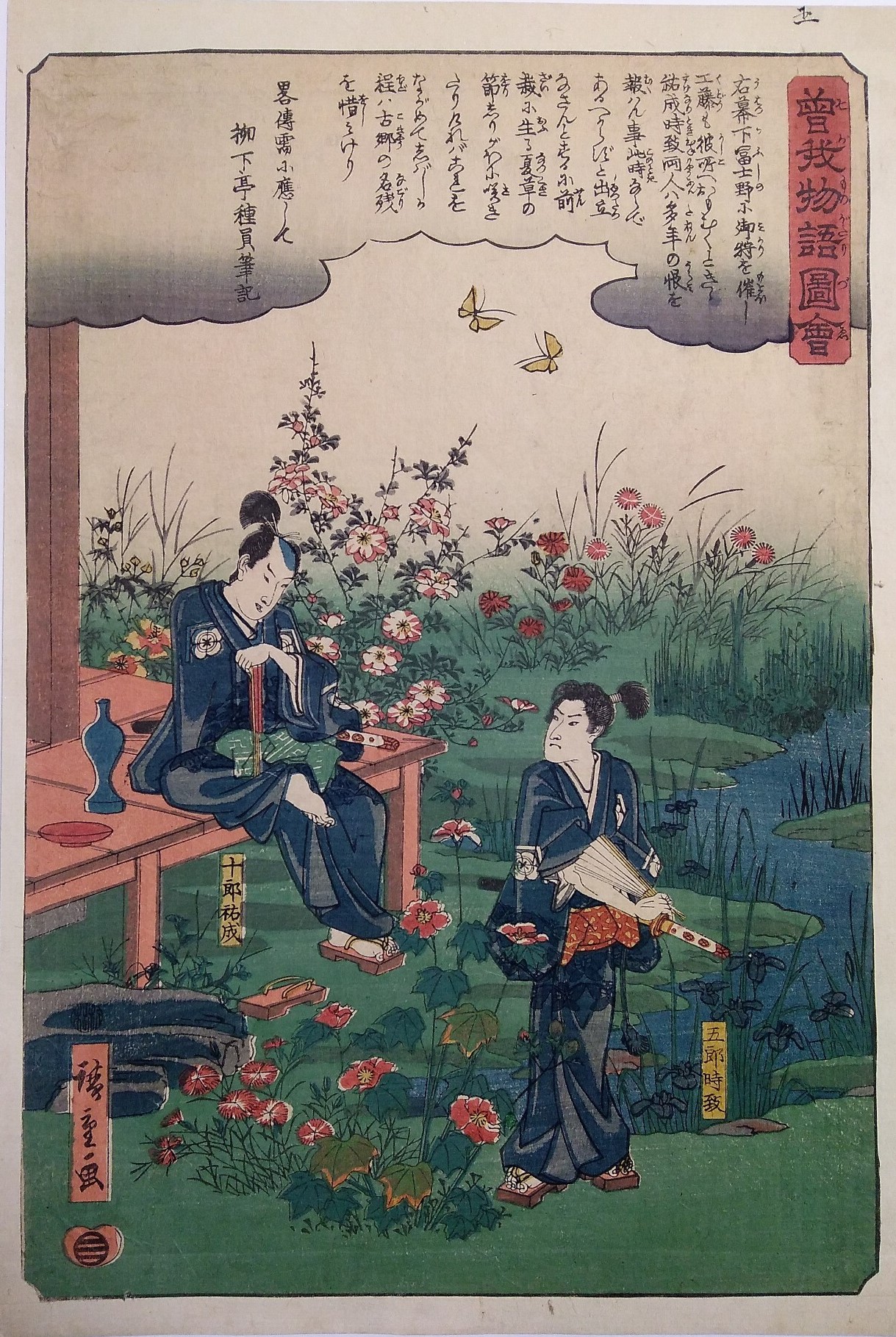
The two Sōga brothers, Sukenari and Tokimune, are peacefully relaxing in a summer garden before the Fuji no makigari hunting banquet.
Tokimune is standing in the middle of the garden surrounded by flowers while his brother Sukenari sits on the veranda, relaxing and drinking some sake.
USD$ 175.00