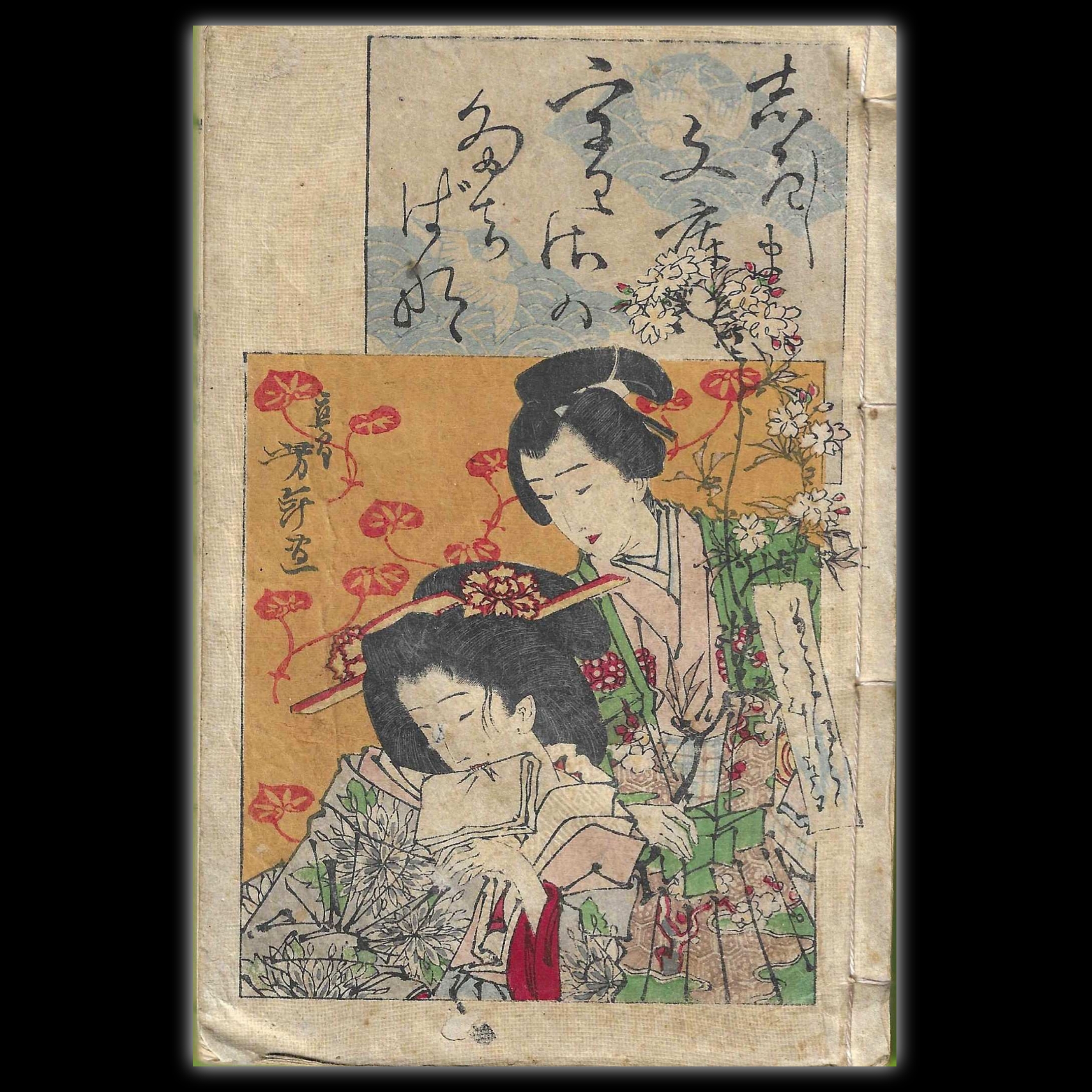
Tsukioka Yoshitoshi
1839 ~ 1892Taisō Yoshitoshi, regarded as one of the last great masters of ukiyo-e, was born in Edo in 1839. At the age of eleven he entered the studio of Utagawa Kuniyoshi, who gave him the artist name Yoshitoshi.
Living through the final decades of the Edo period and the rapid modernization of the Meiji era, he developed a career that bridged traditional ukiyo-e with the changing artistic and social landscape of modern Japan.
Yoshitoshi first gained recognition with warrior prints, kabuki actor portraits, and historical subjects before expanding his repertoire to include scenes inspired by contemporary life, literary themes, and supernatural
folklore. His imaginative compositions, dramatic storytelling, and psychological depth distinguished him from his contemporaries, making him one of the most original artists of nineteenth-century Japanese printmaking.
Among his greatest achievements are the celebrated series One Hundred Aspects of the Moon, New Forms of Thirty-Six Ghosts, and Thirty-two Aspects of Women, all of which demonstrate his remarkable ability to combine historical,
literary, and emotional themes with technical refinement.
Although Yoshitoshi experienced recurring episodes of mental illness during his life, he remained extraordinarily productive and created many of his finest works during the final decade of his career. He died in 1892 from a cerebral
hemorrhage at the age of fifty-three. Through pupils such as Mizuno Toshikata and Migita Toshihide, his artistic vision continued to influence later generations, and today his prints are regarded as masterpieces that represent the
culmination of the ukiyo-e tradition while anticipating the artistic sensibilities of modern Japan.
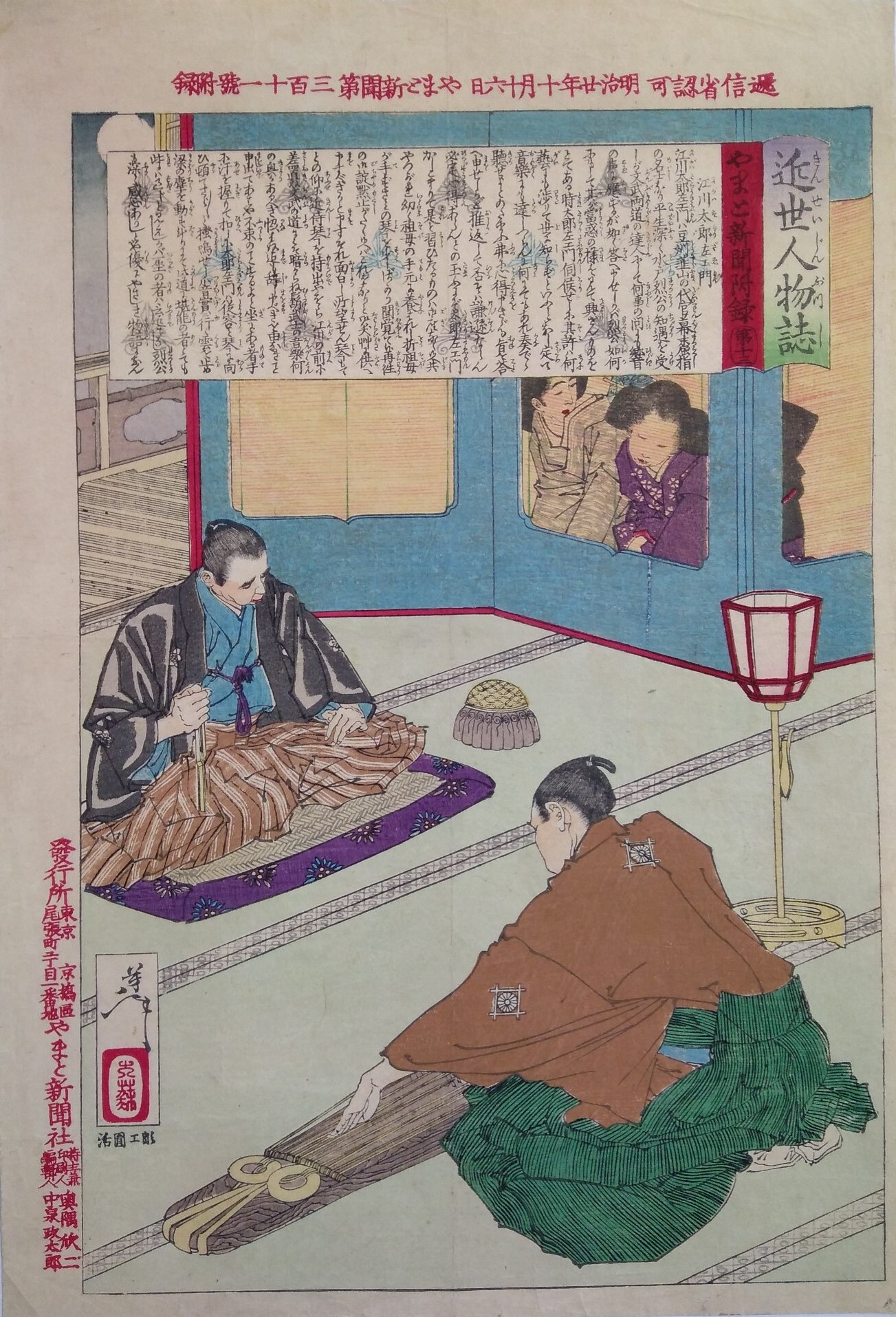
This print was produced as a supplement of the Yamato Newspaper and distributed to its subscribers.
It portraits Egawa Tarōzaemon, thinker and military advisor who suggested the Tokugawa Shogunate to improve Japanese military defense prior to the arrival of Commodore Matthew Perry in 1853.
His forename was Egawa Hidetake, 38th descendant of the Egawa House, which claimed to have his origin in Minamoto Yorichika, founder of the Yamato Genji line lived back in the Heian period (794 ~ 1185).
Here he is gently playing the koto for Tokugawa Nariaki, Lord of Mito, who seems to be completed absorbed in listening, delighted.
Some beauties behind a byōbu (Japanese folding screen) are enjoying the scene too.
USD$ 249.00