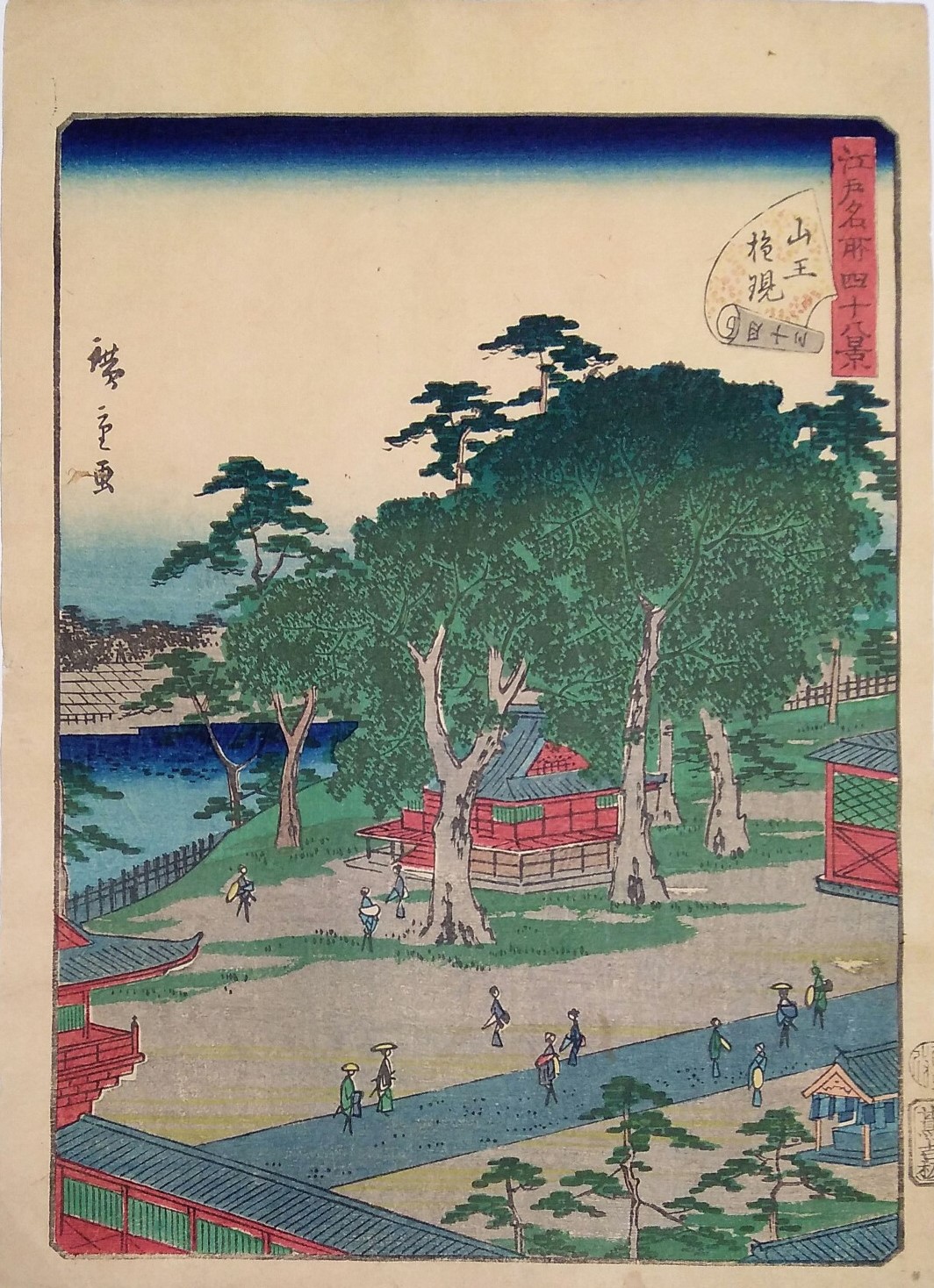
Utagawa Hiroshige II
1826 ~ 1869Hiroshige II, born in 1826 as Suzuki Chinpei and first known by the artistic name Shigenobu, was the most accomplished and successful pupil of the great landscape master Utagawa Hiroshige.
After the death of his teacher in 1858, he married Hiroshige`s daughter, Otatsu, and inherited the prestigious Hiroshige name, becoming known as Hiroshige II. Following the dissolution of the marriage around 1865,
he moved to Yokohama and adopted the name Kisai Risshō (Ryūshō), under which he continued his artistic career.
Hiroshige II is best remembered for his landscape prints, which follow the style of his master so closely that even modern scholars have sometimes struggled to distinguish their works. While remaining faithful to Hiroshige`s
artistic vision, he demonstrated considerable technical skill and played an important role in preserving and extending the tradition of landscape ukiyo-e during the final years of the Edo period.
Throughout his career, he collaborated with notable artists of the Utagawa school, including Utagawa Kunisada, and produced a wide range of works. In his later years, he also decorated export goods such as tea chests, lanterns,
and other lacquered objects. He used several art names during his lifetime, including Ichiryūsai, Ryūsai, Shigenobu, Kisai, Ryūshō, and Risshō.
Among his most celebrated series are One Hundred Famous Views in the Various Provinces (Shokoku meisho hyakkei), Thirty-six Views of the Eastern Capital (Tōto sanjūrokkei), and Eight Views of the Sumida River. These works clearly
reflect the influence of Hiroshige I`s celebrated landscape series while demonstrating Hiroshige II`s own mastery of composition and colour.
Although he never achieved the international fame of his master, Hiroshige II remains one of the most important successors of the Hiroshige lineage and a significant figure in late Edo-period ukiyo-e. He died in Yokohama in 1869,
leaving behind a substantial body of work that continues to be admired by collectors and scholars alike.
 Sold Out
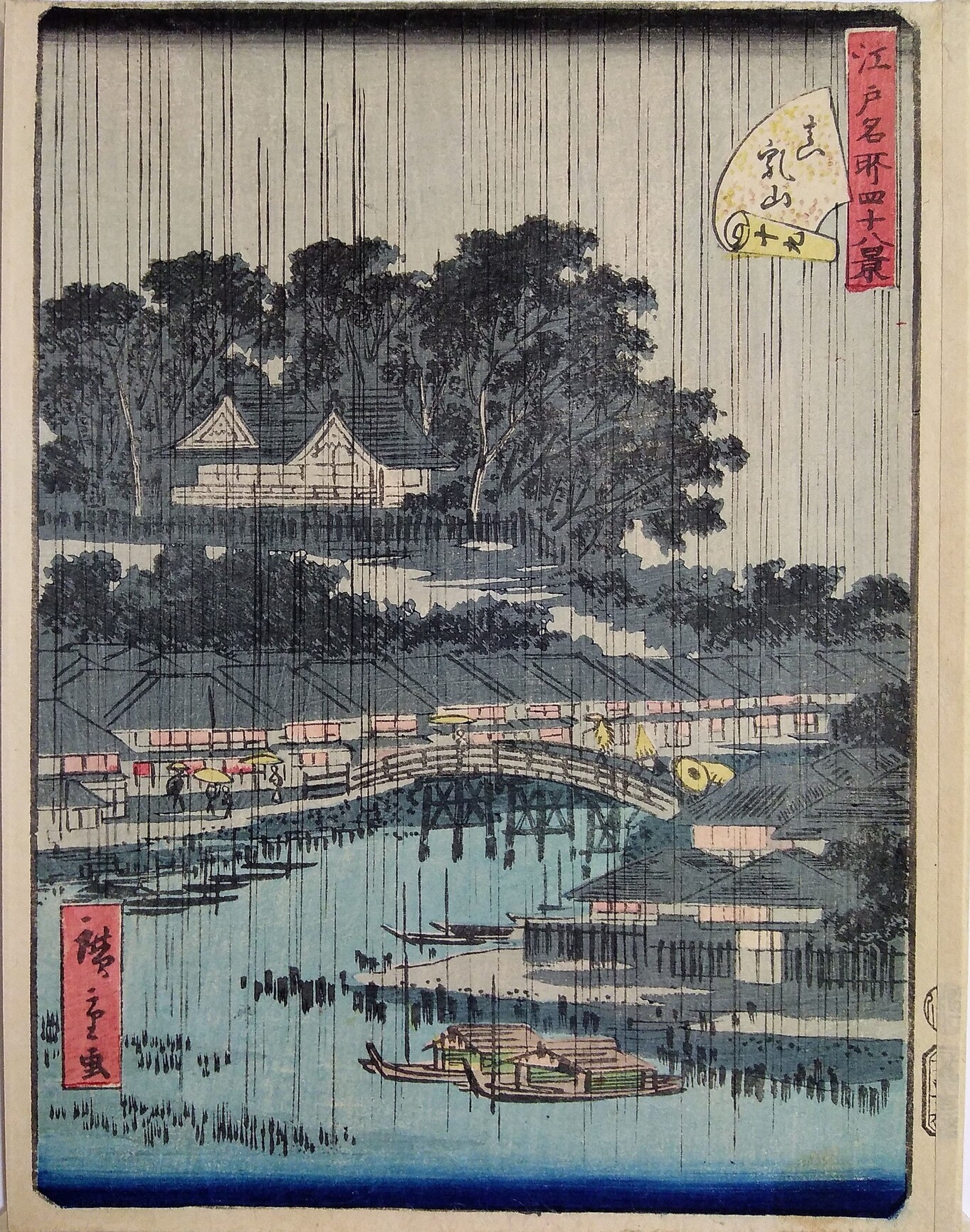
The myth says that Matsuchiyama raised itself from the earth during the reign of Empress Suiko (592 ~ 628), when a golden dragon descended upon it, bestowing its protection.
It hosts the Matsuchiyama Shoten Honryūin, which is part of the wider Sensōji temple in Tōkyō`s Asakusa district.
It belongs to the Sho Kannon sect, which is a branch of Tendai Buddhism. In 857, Jikaku Daishi Ennin, famous for having restored the Tendai Sect, spent a few nights in the temple during one of his pilgrimages,
performing the Yokuyū, or oil-bath ritual, which is still performed today to fulfill believer`s prayers.
Sold Out
 Sold Out
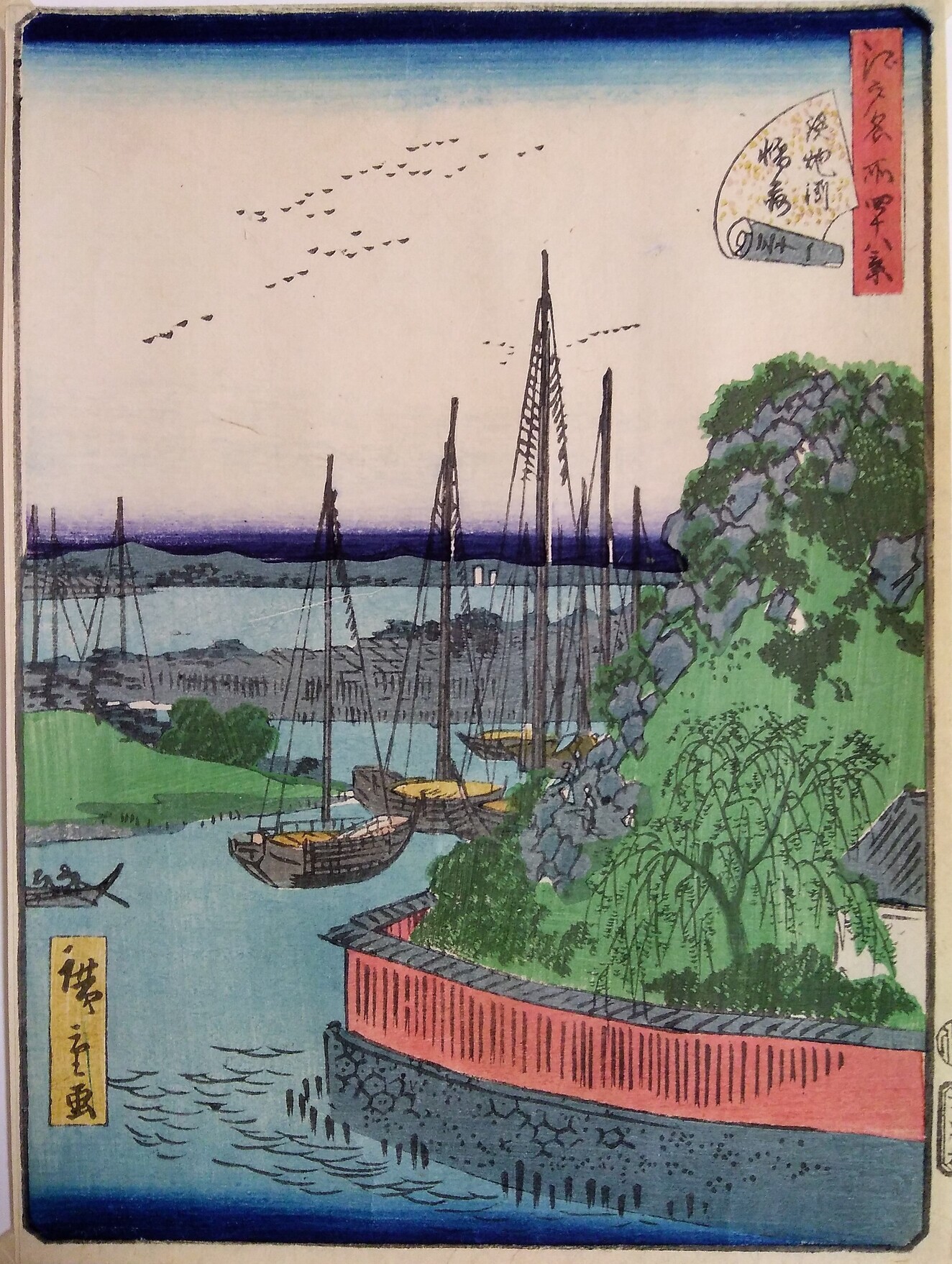
A quiet cove at Teppōzu: boats at anchor, the red palisade and wooded slope of the Inari Shrine at right, willow over the water, Edo Bay beyond under a graded evening sky with birds.
The Teppōzu Inari Shrine is located in the Chūō ward of Tōkyō.
The name Teppōzu means “rifle,” and it is said to originate either from the rifle-shaped sandbars along the nearby shore, or from the fact that the area was once used as a testing ground for artillery.
Formerly known as Minato Inari Jinja, it contains a fujizuka—a mound built to resemble Mount Fuji—from which visitors could enjoy a beautiful view of the mountain itself. In the past, numerous ships passed
through the port at Teppōzu, and travelers prayed at the shrine for safety during their journeys.
Sold Out
 Sold Out
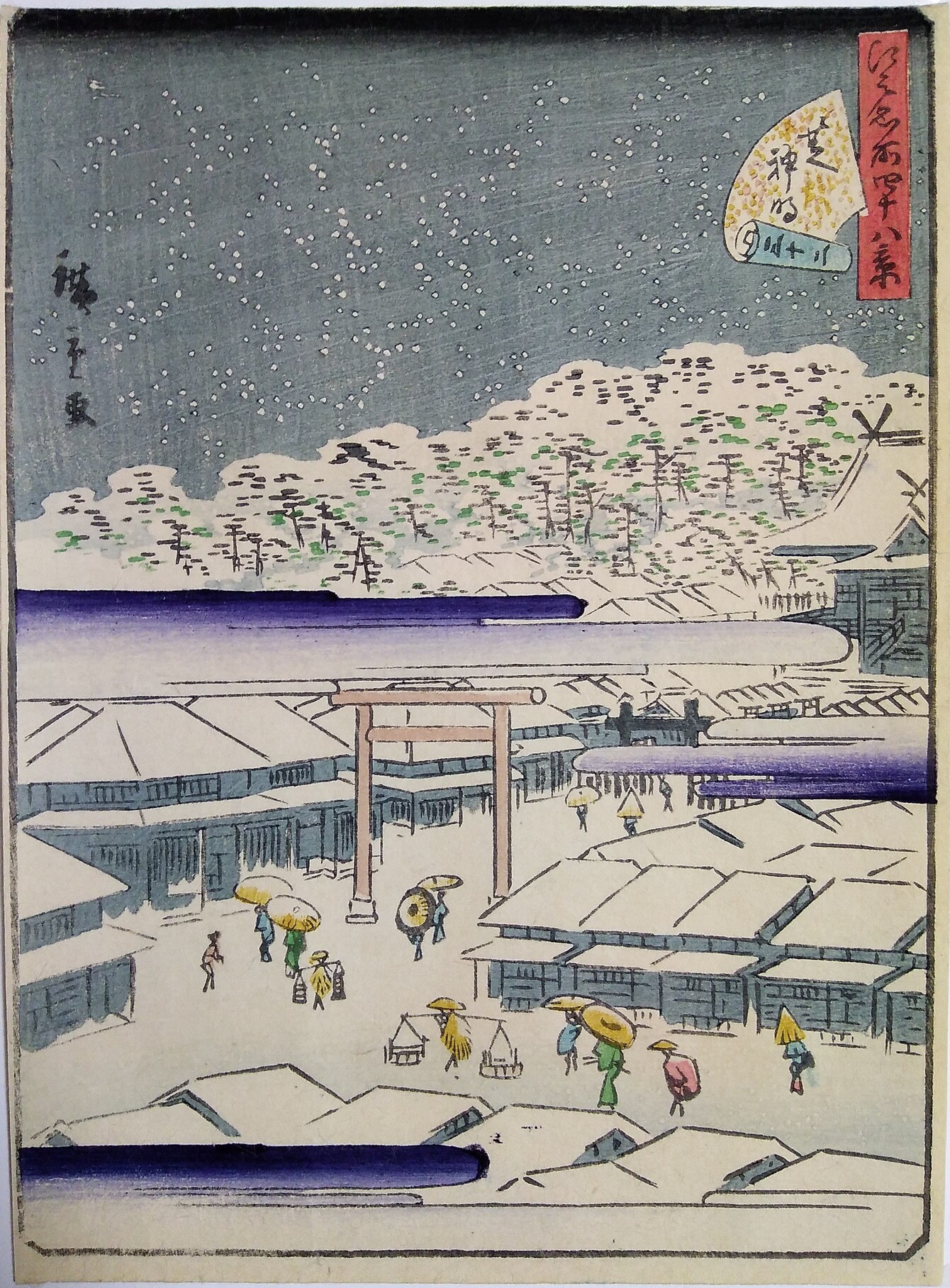
The Shiba Shinmei Gū is an ancient shrine located in the Minato Ward of Tokyo.
It was originally established to house a bunrei, a division of the spirit from the Ise Shrine (Ise Jingū), which is the oldest Shinto shrine in Japan.
A bunrei is a new Shinto spirit (kami) created through the division of an older spirit for relocation or re-enshrinement in a new place of worship.
During the Edo period, the area around Shiba Shinmei Gū was a bustling business district where sumo wrestling matches and theatrical performances were held on the shrine grounds.
One notable incident at this site was the "Megumi fight", a violent clash between sumo wrestlers and the Mugumi no tobi, a firefighters squad, over territorial claims.
Each September, the shrine hosts the Daradara Festival, where ginger, chigibako lucky charms, and amazake are sold, transforming the shrine into a vast marketplace.
Today, the shrine is known as Shiba Daijin Gū.
Sold Out
 Sold Out
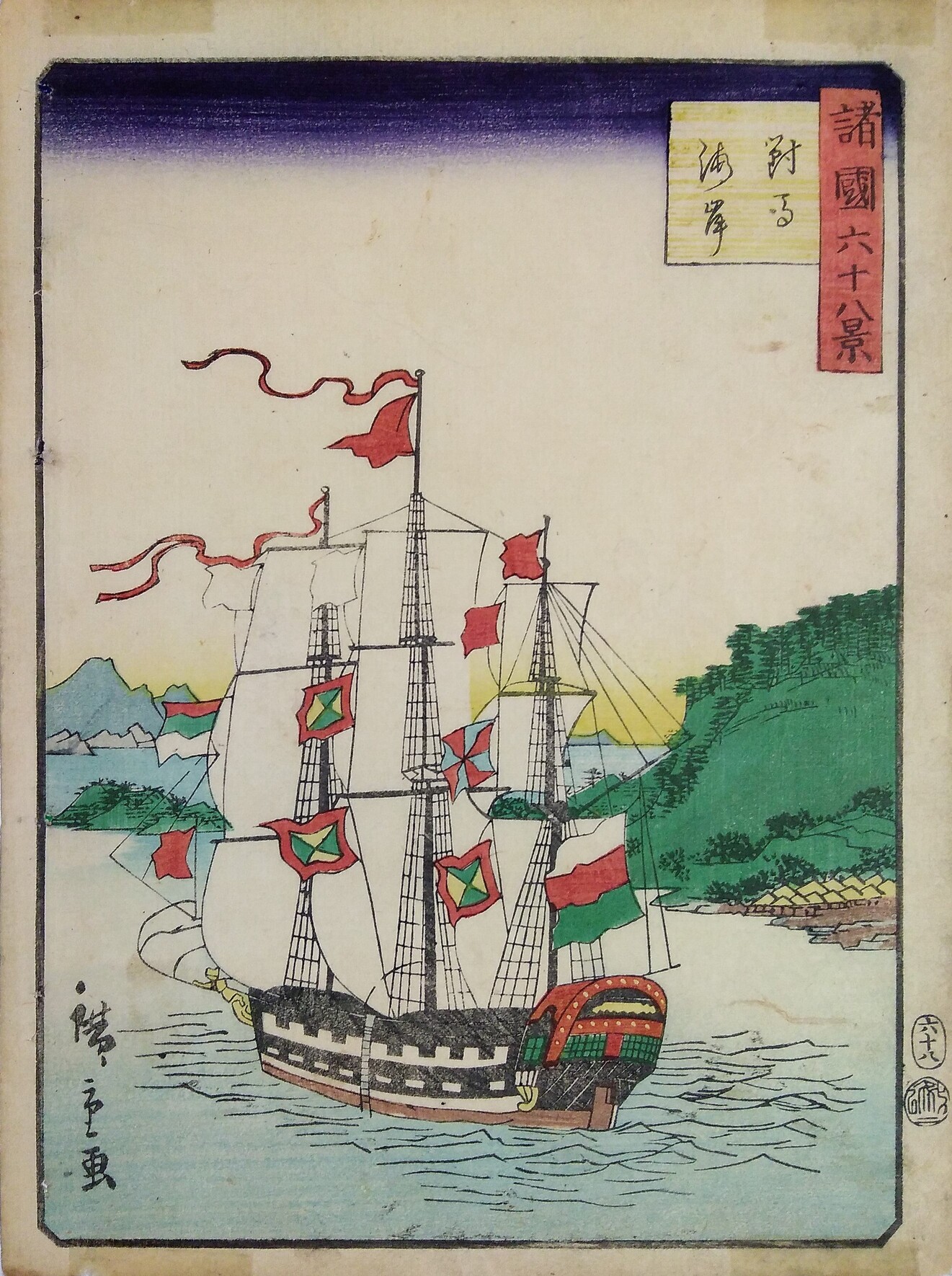
A picturesque view of a Western ship, likely a Dutch carrack, sailing through Tsushima Bay.
Tsushima is a small Japanese island situated between Kyūshū and the Korean Peninsula, and is part of Nagasaki Prefecture. The island holds historical significance as the site where
Japanese forces under Hōjō Tokimune resisted Mongol invasions led by Kublai Khan in 1274 and again in 1281. Both invasion attempts were ultimately thwarted by powerful typhoons that
destroyed much of the Mongol fleet an event that gave rise to the term kamikaze (神風), meaning “divine wind.”
Before Japan opened to the West in 1854, the Dutch were the only Westerners allowed to trade with the country. Their access was strictly limited to the artificial island of Dejima in Nagasaki.
As a result, it was not uncommon for Dutch ships to be seen passing by Tsushima on their way to or from Japan.
Sold Out
 Sold Out
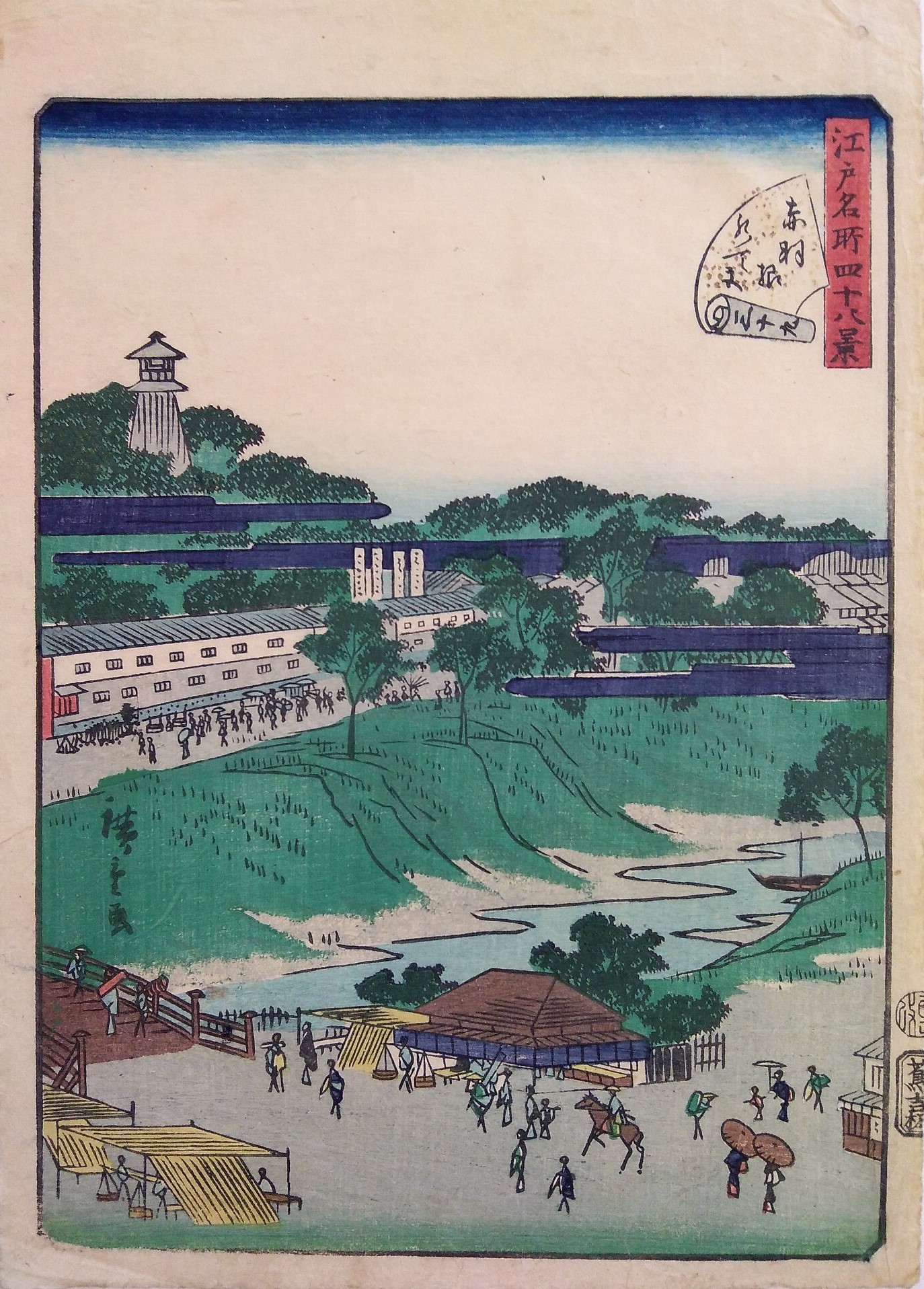
Akabane is a small neighborhood situated between the Akabane Bridge and the Nakano Bridge in Mita, a district within the Minato Ward, located in the southern part of Edo.
The name "Akabane" is believed to originate from the red soil (Akahani) that is characteristic of this area. This residential complex is notable for housing the largest fire watchtower in Edo and the Suitengū Shrine.
The Arima family, which has been the head of the Kurume feud in Kyūshū since the 17th century, is closely associated with these landmarks.
The Suitengū Shrine venerates the Suijin, the water deity of the Chikugo River. People used to offer prayers at this shrine to seek assistance in locating lost items and for safe childbirth. General worship ceremonies
were typically held on the fifth day of each month.
In 1871, the complex was relocated to Aoyama, and in 1872, it was moved again to Nihonbashi, following the relocation of the Arima residence.
Sold Out
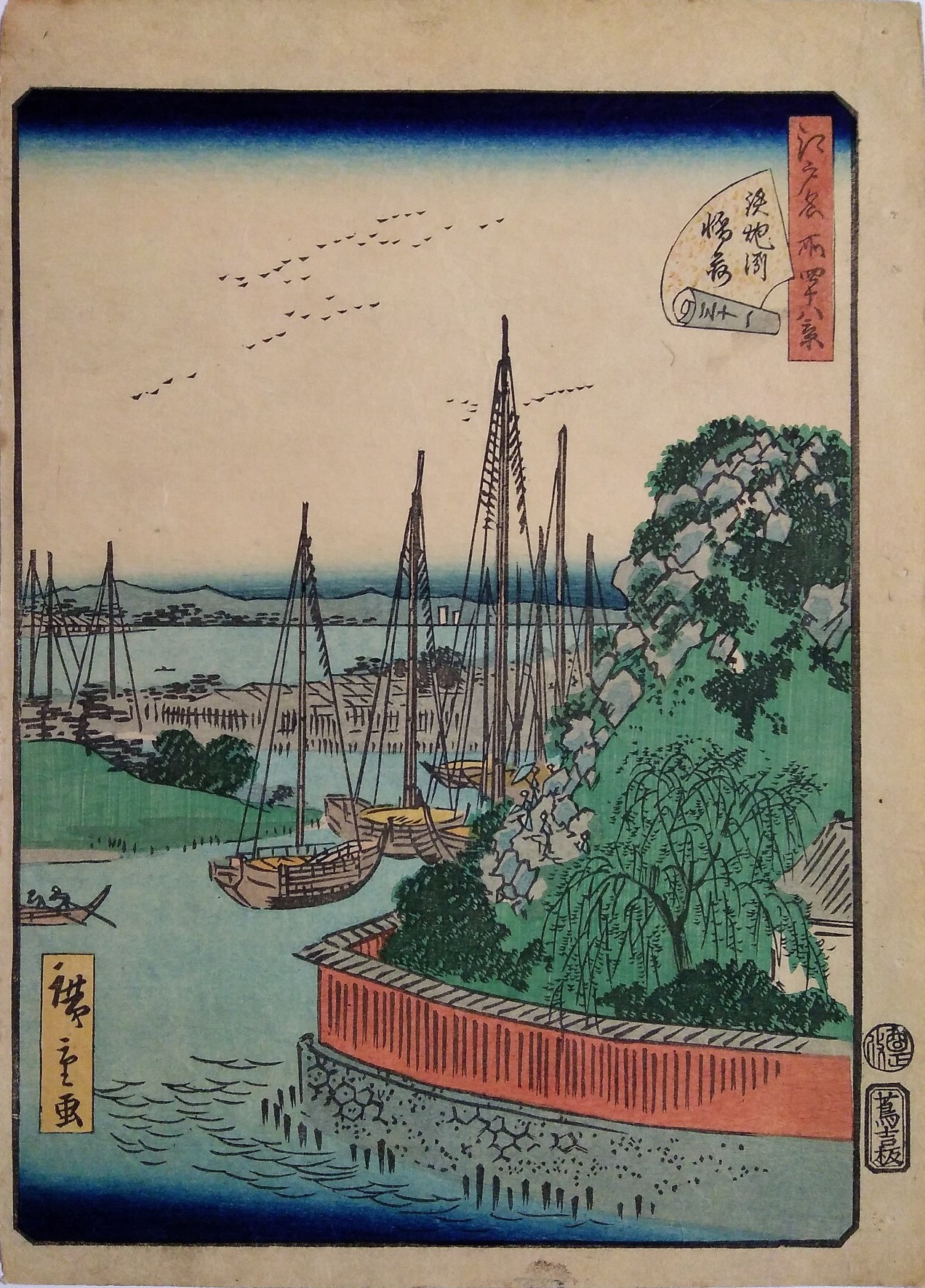
A quiet cove at Teppōzu: boats at anchor, the red palisade and wooded slope of the Inari Shrine at right, willow over the water, Edo Bay beyond under a graded evening sky with birds.
The Teppōzu Inari Shrine is located in the Chūō ward of Tōkyō.
The name Teppōzu means “rifle,” and it is said to originate either from the rifle-shaped sandbars along the nearby shore, or from the fact that the area was once used as a testing ground for artillery.
Formerly known as Minato Inari Jinja, it contains a fujizuka—a mound built to resemble Mount Fuji—from which visitors could enjoy a beautiful view of the mountain itself. In the past, numerous ships passed
through the port at Teppōzu, and travelers prayed at the shrine for safety during their journeys.
USD$ 153.00
 Sold Out
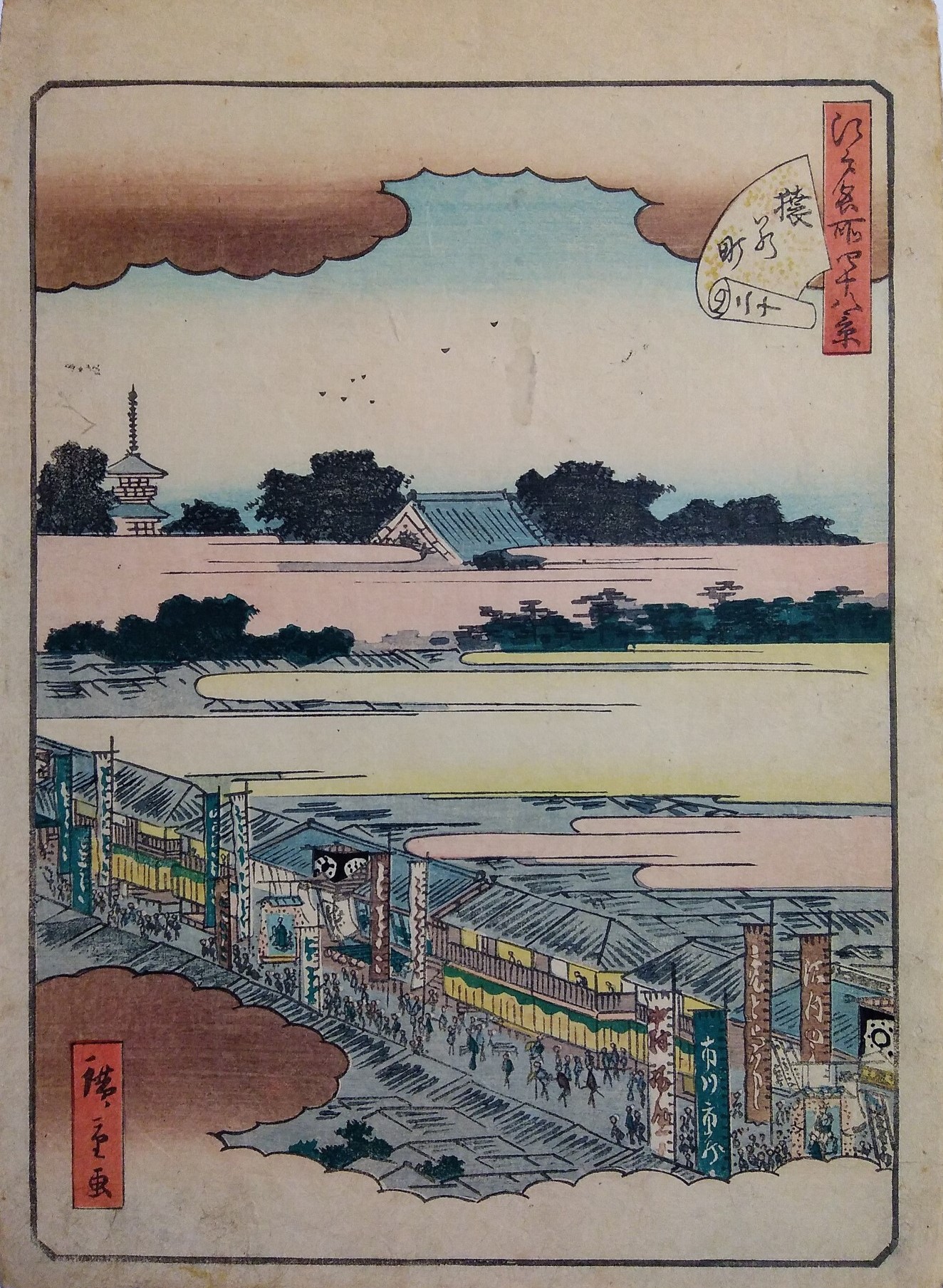
Saruwakachō was settled in the Taitō district of Edo, precisely in Asakusa, and since 1841, as a consequence of the Tenpō reforms, became the licensed Kabuki theatre district of the city.
The name of the area seems to recall the one of Saruwaka (Nakamura) Kanzaburō who is said to have been the founder of Edo-style Kabuki.
From the beginning of the Edo era onward kabuki , puppetry and other performances related theaters which were previously located in Sakaichō (Nakamura Theater), Fukiyachō (Ichimura Theater) and Kobikichō (Morita Theater)
were ordered to be moved here. The street was lively and colorful, filled with billboards, placards and flags advertising plays, actors and tea houses which offered food, rest and guidence to the visitors.
The district kept flourishing until the beginning of the Meiji Era, when the theaters start being relocated one after another letting the area, inevitably, slowly disappearing.
Sold Out
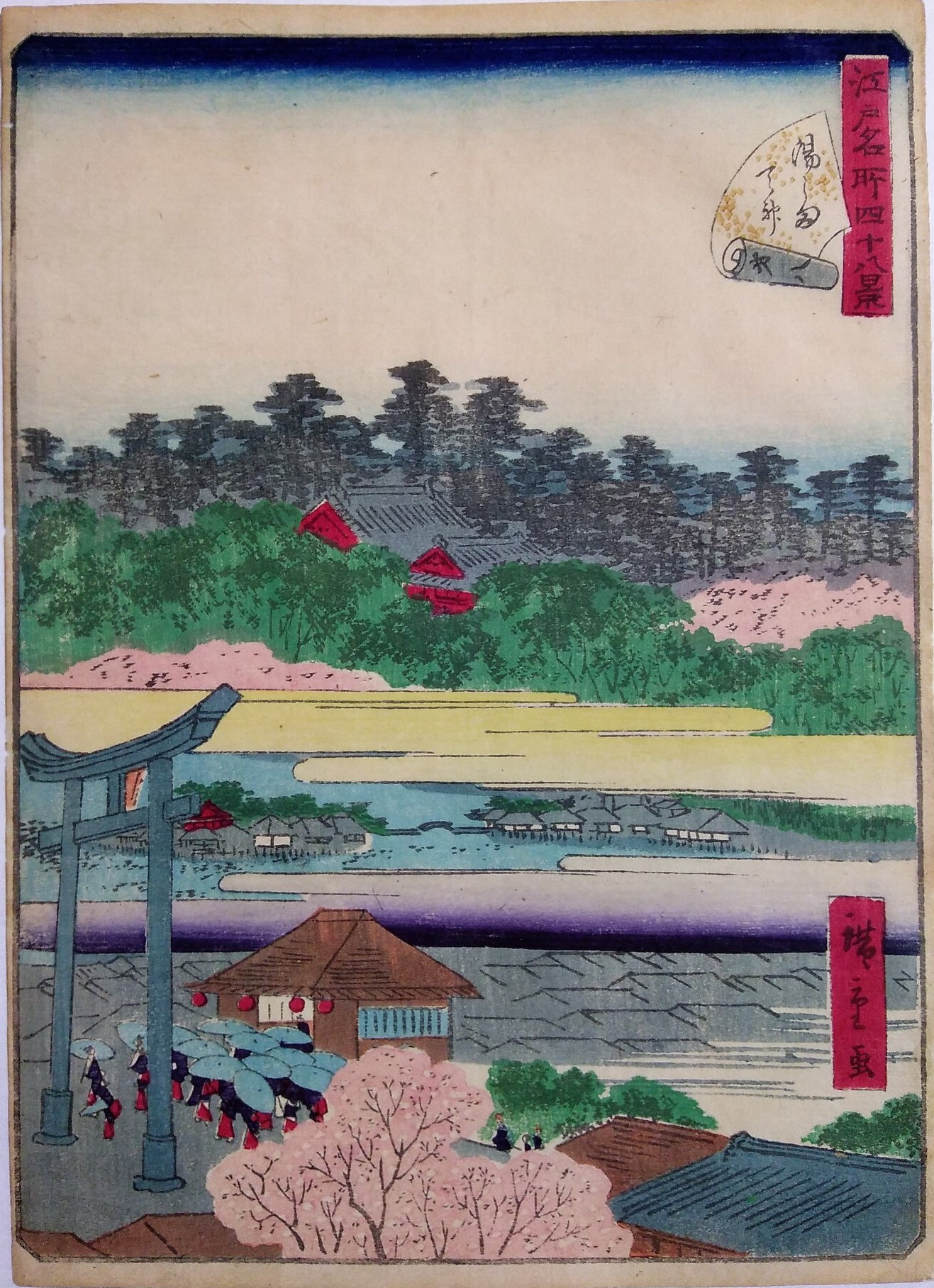
Currently set in the Chiyoda district of Tōkyō, during the Edo era when the city rose up as the center of the military power, with the founding of the Monzen block (Monzenchō) inside it Yushima became a
residential area for lower rank vassals of the Shōgun.
Yushima Tenjin was revered and worshipped as the God of learning and study by any citizen, despite of theri rank or social status.
In the Genroku era (1688 ~ 1704) a shrine dedicated to Confucius was moved in the area from Ueno and a Shogunate government authorized educational facility (the Shōheizaka gakumondokoro) was established too.
USD$ 144.00
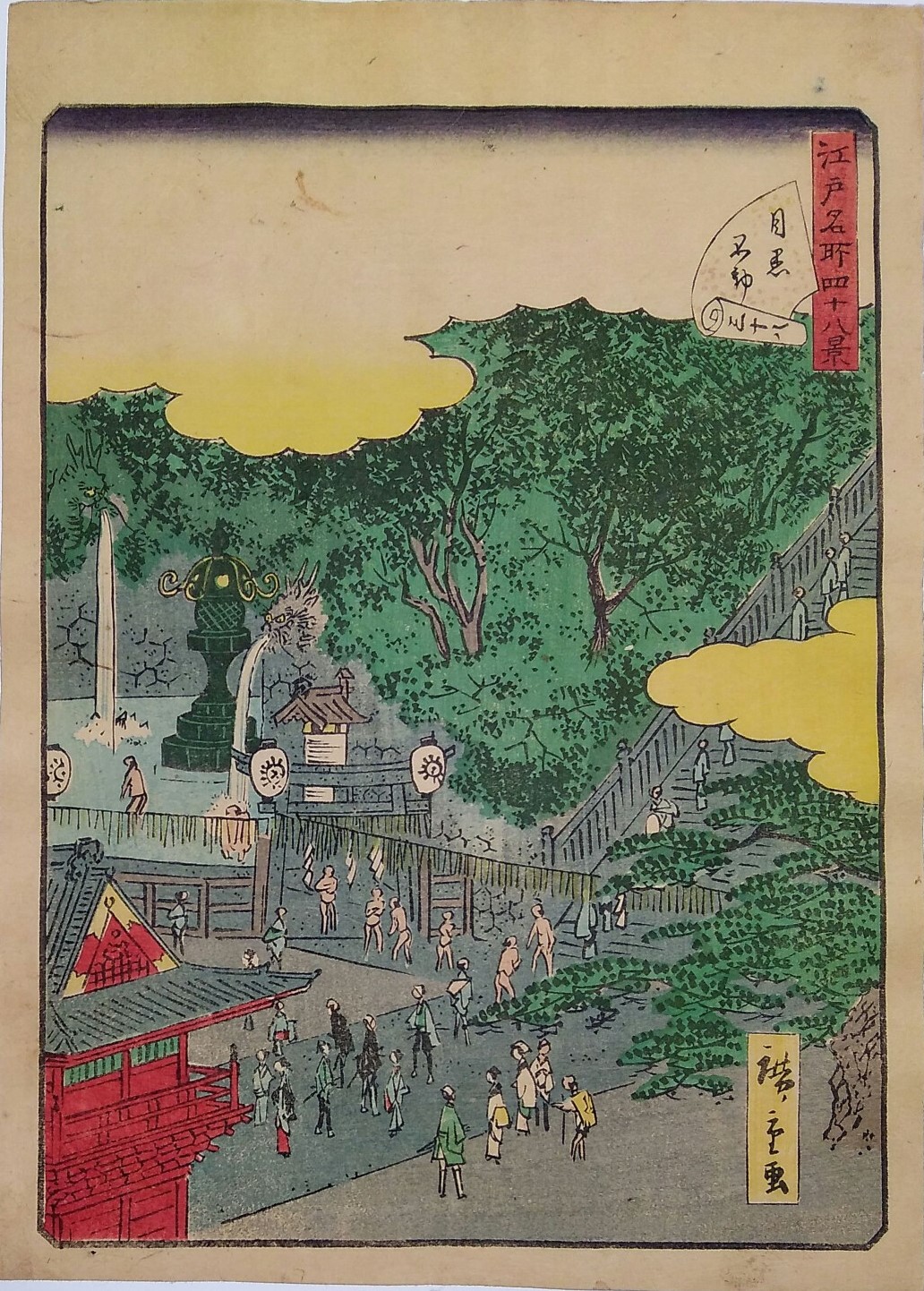
The temple, also known as Ryūsenji, is located in the Meguro ward of Tōkyō and belong to the Tendai buddhist sect. It is also one of the most important temples in the Kantō area dedicated to Fudō Myōō,
included in its thirty-six temples pilgirimage route.
According to legends and folklore the temple was built in 808 by the monk Ennin to enshrine in it a satue of Fudō Myōō when he was on his way to the Mount Hiei, following his teacher.
Dating back the Edo era, the temple was renowned for its lottery and for its "Tokko no taki" waterfall and spring water, which was believed having healing powers for the spirit, purifying the mind from its wordly desires,
and for the body, curing illness.
USD$ 150.00

Estabilished in the Fukugawa neighbourhood in 1627 and commonly referred to as "Fukagawa Hachimangu" the Tomioka Hachimangu Shrine is a Hachiman Shrine located in Tomioka, Koto district, Tokyo.
It was the largest Hachiman Shrine in Edo, and its festival held in August, known as the "Fukagawa Hachiman Festival," was one of the three major festivals of the City. Additionally, it is the shrine where Edo charity sumo
(Edo Kanjin Sumo) originated, and within its precincts, numerous stone monuments related to professional sumo wrestlers, including the "Yokozuna Rikishi Monument," have been erected.
USD$ 164.00