Ikeda Terukata
1883 ~ 1921Ikeda Terukata, born Ikeda Shōshirō in Tokyo in 1883, was the second son of a craftsman specializing in wooden fittings. In 1895, at the age of twelve, he entered the studio of Mizuno Toshikata, an artist whose work helped transmit the traditions of ukiyo-e to modern Japanese painting.
Toshikata gave him the art name Terukata. He later studied under the prominent Nihonga painter Kawai Gyokudō.
Terukata became closely associated with Sakakibara Shōen, whose real name was Yuriko and who was also a pupil of Toshikata. The two became engaged through their teacher`s mediation, but Terukata subsequently disappeared, and they remained separated for approximately seven years. After eventually reconciling,
they married in 1911, after which Shōen adopted the surname Ikeda. The couple became celebrated as the “inseparable painter couple of the Bunten,” exhibiting and sometimes collaborating on works together.
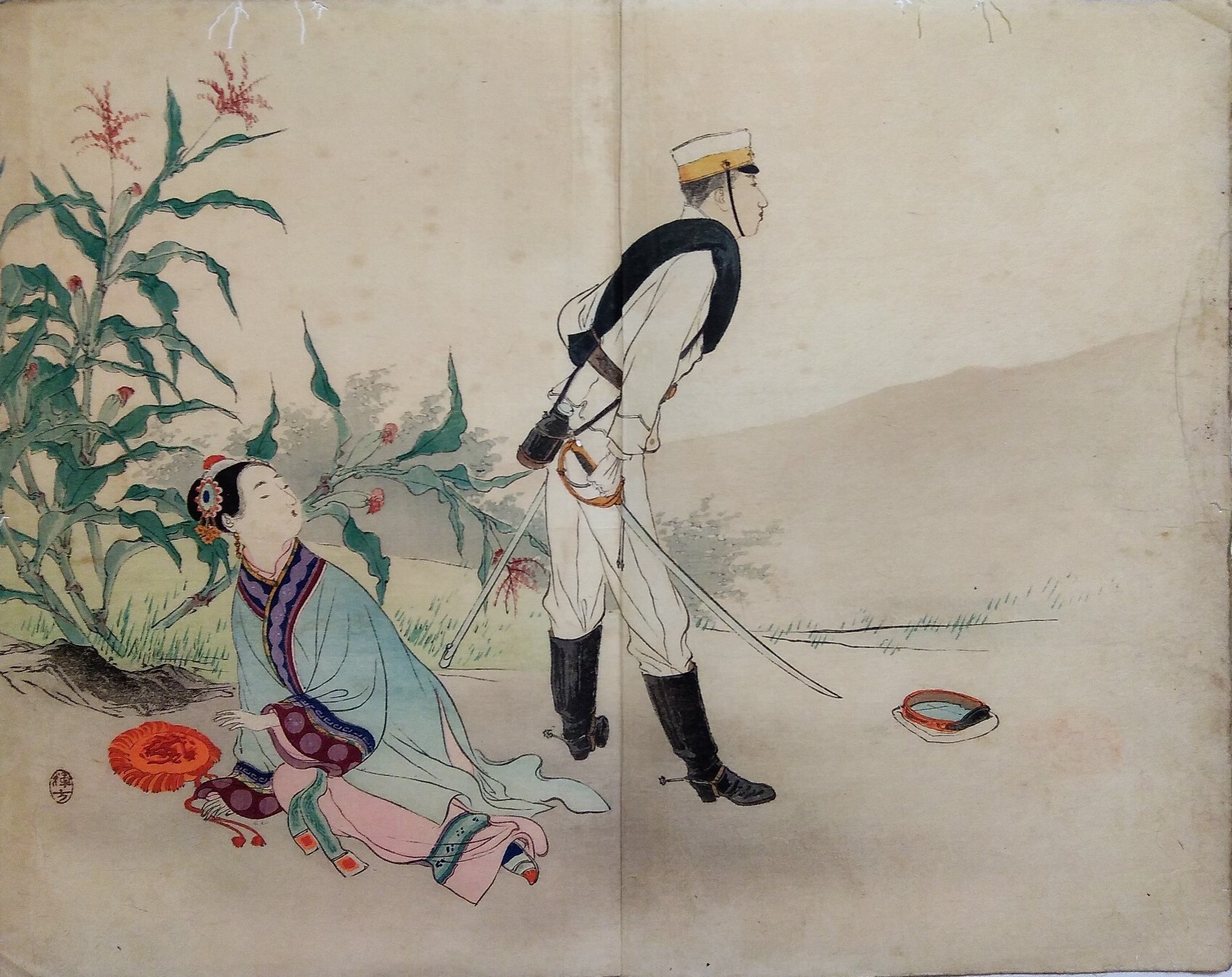
During his early career, Terukata produced woodblock-printed kuchi-e, newspaper and magazine illustrations, bijin-ga, genre scenes and prints relating to the Russo-Japanese War. In 1901, he participated in the formation of the Ugō-kai with Kaburaki Kiyokata, Ono Shizukata and other young artists interested in
developing modern genre painting from the traditions of ukiyo-e. He later achieved considerable success at the government-sponsored Bunten exhibitions, receiving awards for works such as Ryōgoku, Kobikichō Then and Now and Evening Shower.
Terukata and Shōen also taught Japanese painting to the French artist Paul Jacoulet, who grew up in Japan and later became known for his technically sophisticated woodblock prints. In 1919, Terukata founded the artistic association Josui-kai with Ishii Rinkyō, Yamauchi Tamon and other painters.
Specializing in bijin-ga and scenes of contemporary and historical life, Terukata combined the visual heritage of ukiyo-e with the realism and sensibility of modern Nihonga. Together with Shōen, he contributed significantly to the development of modern bijin-ga during the late Meiji and Taishō periods. He died from pulmonary
illness in 1921, four years after his wife, at the age of thirty-eight.