Takeuchi Keishu
1861 ~ 1942Takeuchi Keishū, born Takeuchi Ginpei in Edo (modern Tokyo), was the son of a retainer serving the Kishū domain in present-day Wakayama Prefecture. As a young man, he was adopted into the family of Kanō Eitoku,
head of the Nakabashi branch of the prestigious Kanō school. After leaving the Kanō tradition, he continued his artistic training under Tsukioka Yoshitoshi.
Following the Meiji Restoration, opportunities for traditional painters declined considerably, and Keishū supported himself by decorating porcelain for export. After the suicide of his elder brother, he returned to his family home
and continued this work. Later, after a disagreement with his employer over declining quality standards, he turned to producing hanshita-e, the preparatory drawings used for carving woodblock prints.
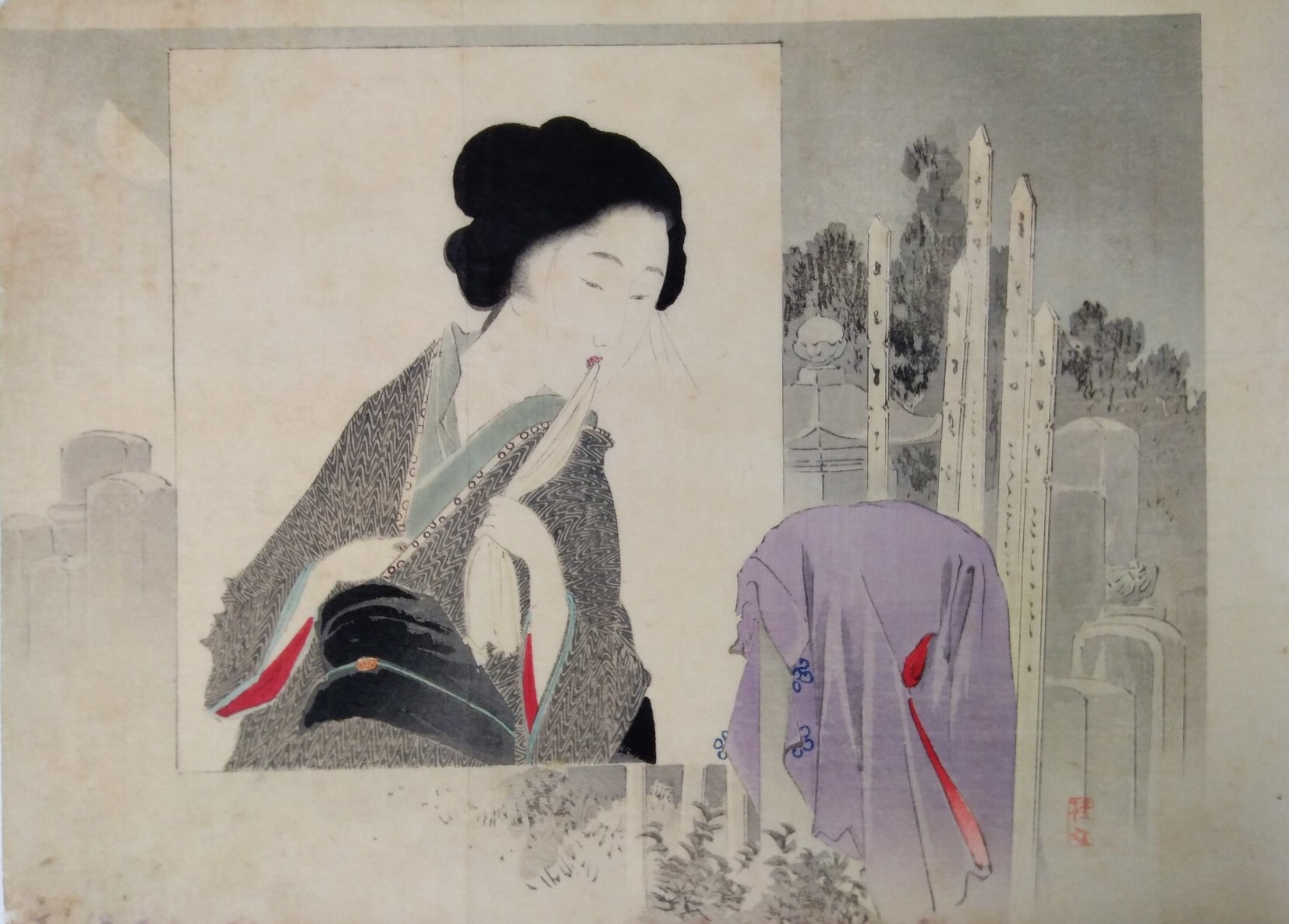
Keishū became particularly renowned for his kuchi-e illustrations, creating frontispieces for publications associated with the Ken`yūsha literary circle, the publisher Hakubunkan, and numerous novels and children`s books. These works
established his reputation as one of the leading illustrators of the Meiji period.
Although largely forgotten today, Keishū was among the most accomplished illustrators of his era. His works are preserved in major collections, including the British Museum and the Minneapolis Institute of Art.