Utagawa Yoshitora
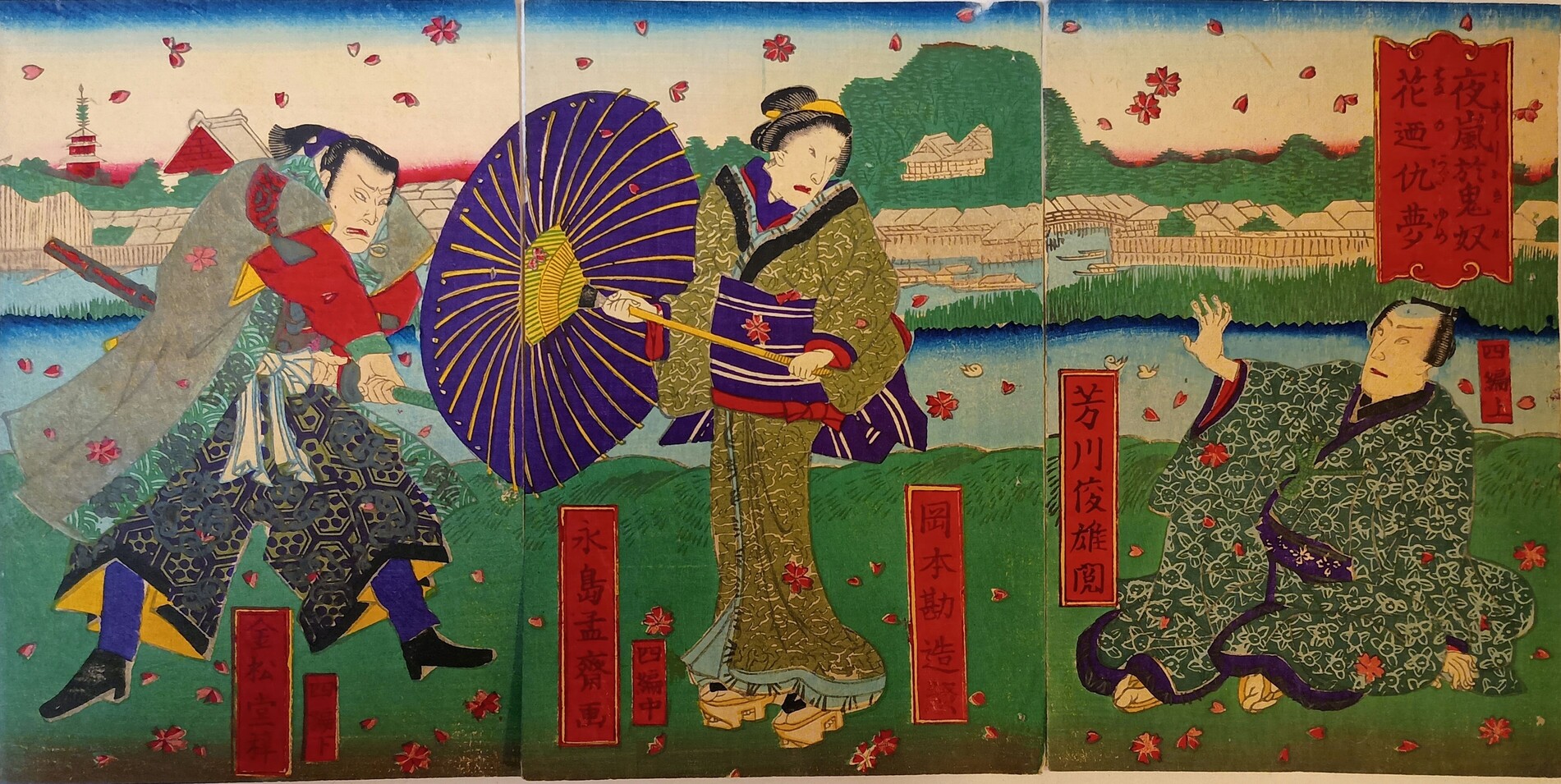
Utagawa Yoshitora was an ukiyo-e artist active from the late Edo period to the early Meiji era. Born in Edo (present-day Tokyo), the exact dates of his birth and death remain unknown.
Yoshitora was one of the oldest pupils of Utagawa Kuniyoshi. After producing a satirical print that was interpreted by the authorities as criticism of Tokugawa Ieyasu, he was sentenced to fifty days in handcuffs.
Shortly afterwards, he left (or was expelled from) Kuniyoshi`s studio. Later in his career, he also used the artist name Mōsai.
Following the Treaty of Kanagawa in 1854 and the opening of the port of Yokohama to foreign trade in 1859, Japan developed a strong curiosity about the outside world. Westerners became the principal subjects of
Yokohama-e, a genre in which Yoshitora excelled. His prints portrayed foreigners in unfamiliar clothing, alongside exotic customs, new technologies, and scenes of everyday life, reflecting how Japanese society
perceived the newly arrived foreign cultures.
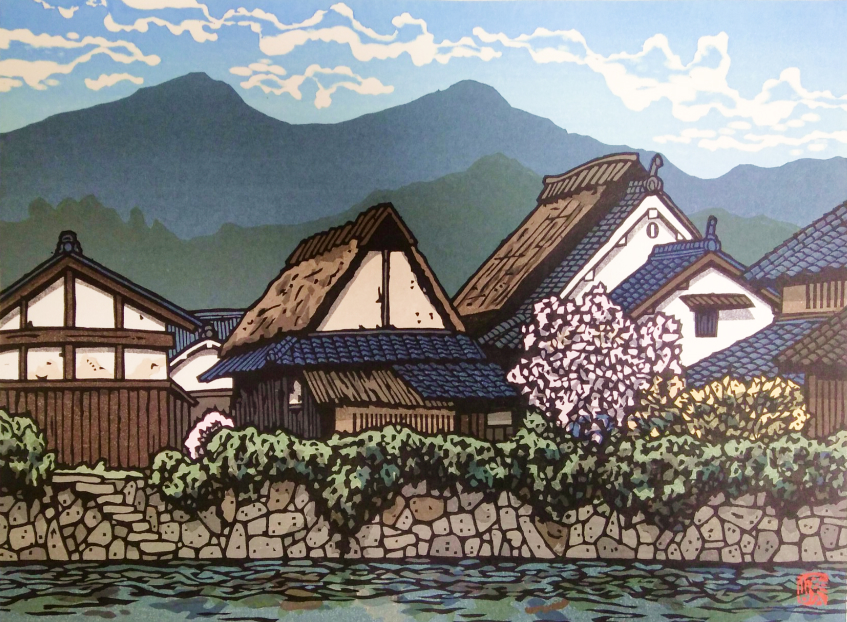
In addition to Yokohama-e, Yoshitora produced prints of warriors, kabuki actors, beautiful women, landscapes, and city views. For many of his depictions of foreign countries, he appears to have relied on Western
engravings and illustrated sources rather than firsthand observation. His work remains an important visual record of Japan`s transition from isolation to international exchange during the final years of the Edo
period and the early decades of the Meiji era.
During the Meiji period, Yoshitora also worked as an illustrator for newly established newspapers. Today, his prints are preserved in major museum collections, including the British Museum, the Metropolitan Museum
of Art, and the Philadelphia Museum of Art.
 Sold Out
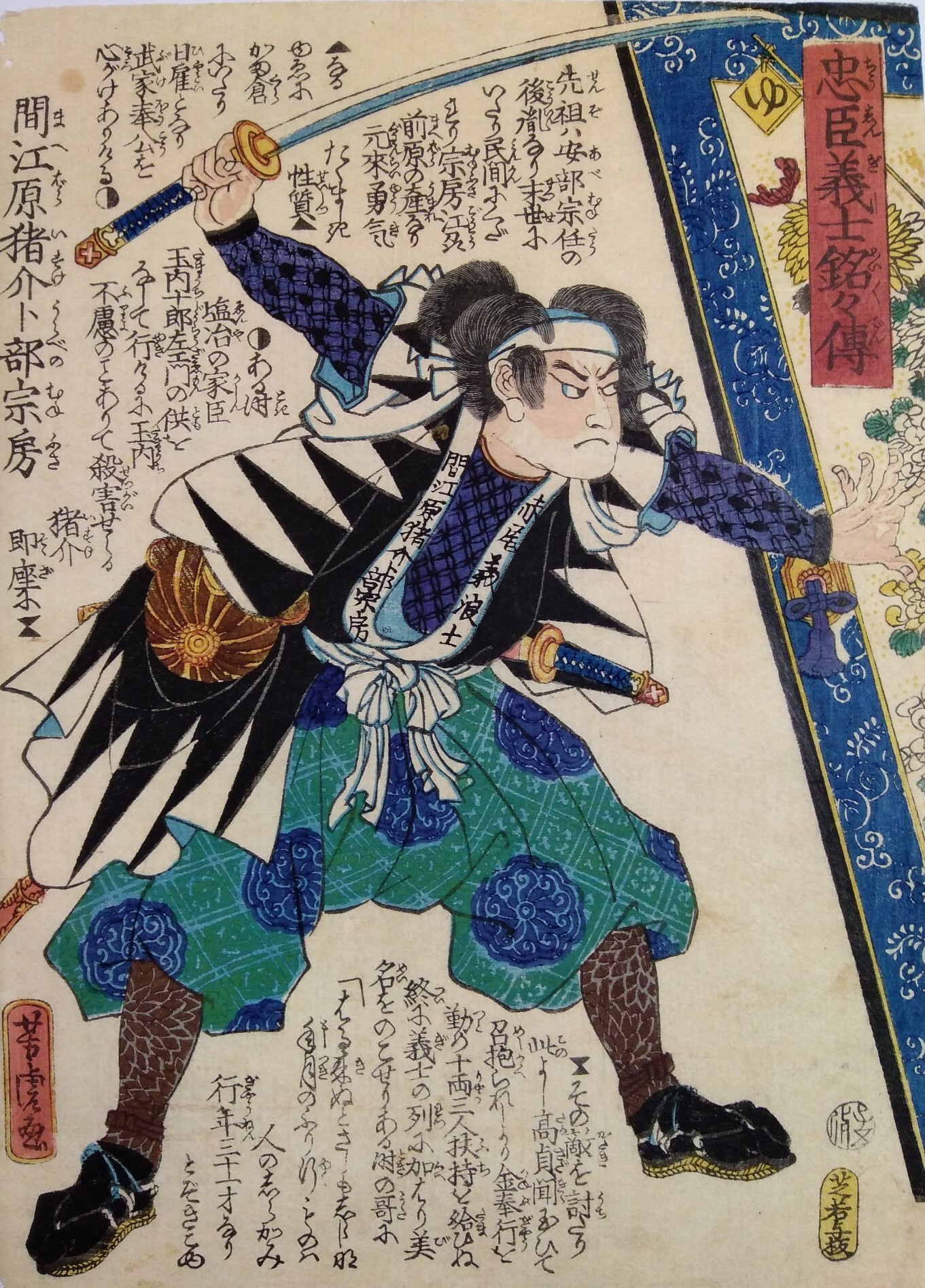
Maebara Isuke Urabe no Munefusa was one of the 47 loyal retainers of Asano Naganori which took part to the assault of Kira Yoshinaka`s mansion, killing him for avenging his Lord Asano.
Here he`s knocking down a door or Kira`s mansion, probably looking for him during the assault.
His real name was actually Maebara Isuke Munefusa, but being any reference to the original characters of the story prohibited and subject to censorship it was changed with a similar one.
Maebara was described as a gentle man of few words, skilled in martial arts and archery.
This series from Yoshitora doesn`t refers to each print using common numbers but with the syllables of the Japanese Hiragana alphabet.
Sold Out
 Sold Out
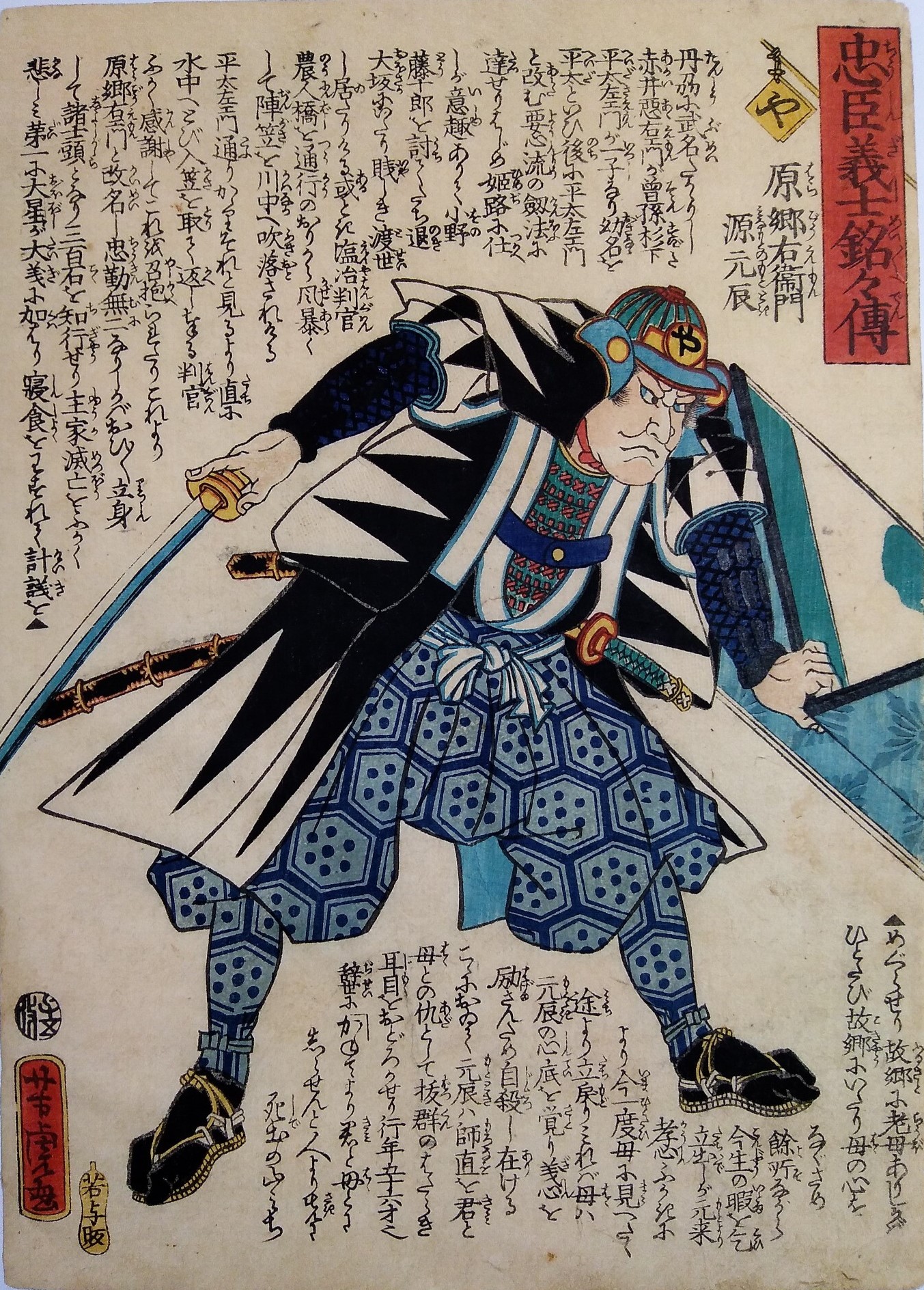
Hara Gōemon Minamoto no Mototatsu was one of the 47 loyal retainers of Asano Naganori which took part to the assault of Kira Yoshinaka`s mansion, killing him for avenging his Lord Asano.
Here he`s knocking down a folding screen, probably looking for Kira.
His real name was actually Hara Sōemon Mototatsu, but being any reference to the original characters of the story prohibited and subject to censorship it was changed with a similar one.
This series from Yoshitora doesn`t refers to each print using common numbers but with the syllables of the Japanese Hiragana alphabet.
Sold Out
 Sold Out
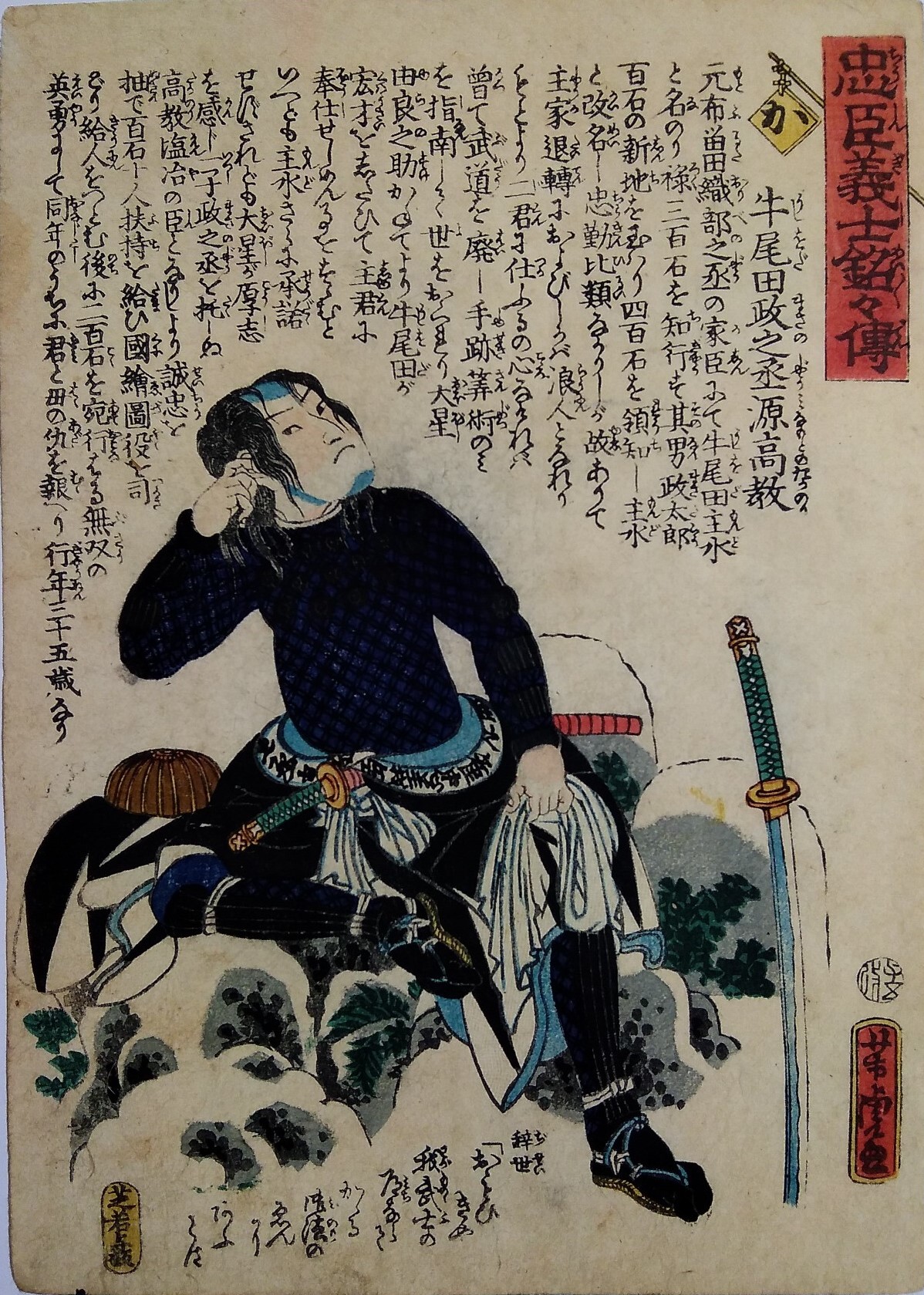
Ushioda Masanojō Minamoto no Takanori was one of the 47 loyal retainers of Asano Naganori which took part to the assault of Kira Yoshinaka`s mansion, killing him for avenging his Lord Asano.
Here he`s sitting on a rock, taking a brief rest after the assault.
His real name was actually Ushioda Matanojō Takanori, but being any reference to the original characters of the story prohibited and subject to censorship it was changed with a similar one.
As any of the 47 warriors Ushioda was trained in the use of variety of weapon, excelling with spear and hooked rope, which used for climb the boundaries of the mansion and open the back gate.
This series from Yoshitora doesn`t refers to each print using common numbers but with the syllables of the Japanese Hiragana alphabet.
Sold Out
 Sold Out
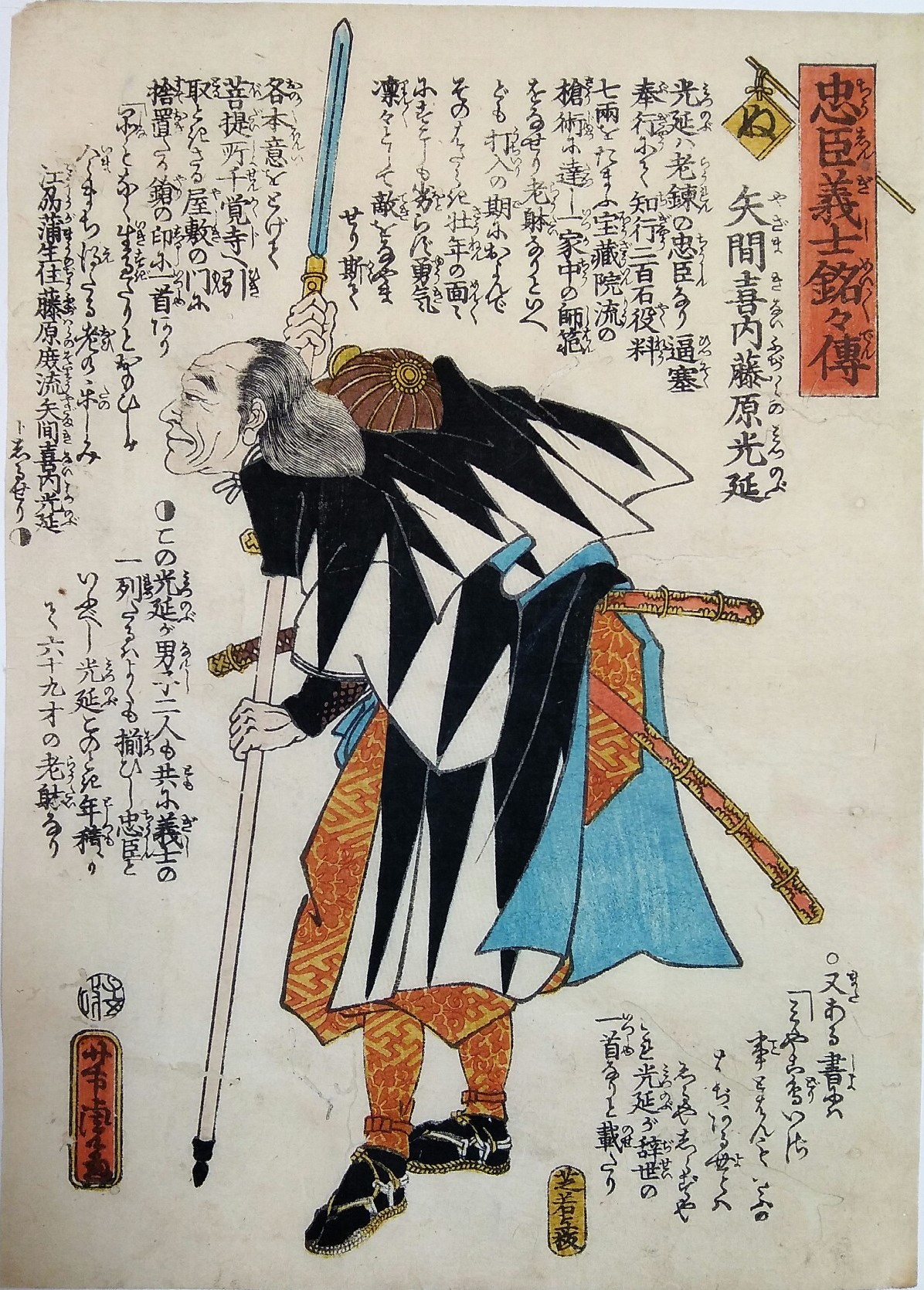
Mitsunobu was a loyal retainer serving as a magistrate in a remote area receiving a stipend of 200 koku and a fee of seven ryō. He excelled in the spear technique and espite being considered an old man,
his performance in martial contests during his later years was not inferior to the vigor of younger men. He faced his opponents courageously and caused them great trouble.
Upon achieving his lifelong goals, he retired to the Sengaku-ji Temple. At the gate of the estate where he resided, there was a poem engraved next to a discarded spear, which says: "Having lived without regrets, I now enjoy the pleasures of old age".
It is known that Mitsunobu resided in Gamo, Echizen Province, and was from the Fujiwara lineage. He had two sons, both of whom also stood as valiant warriors. At the time of the event he was 69 years old but as a true loyalist, he is worthy of being counted among them.
Sold Out
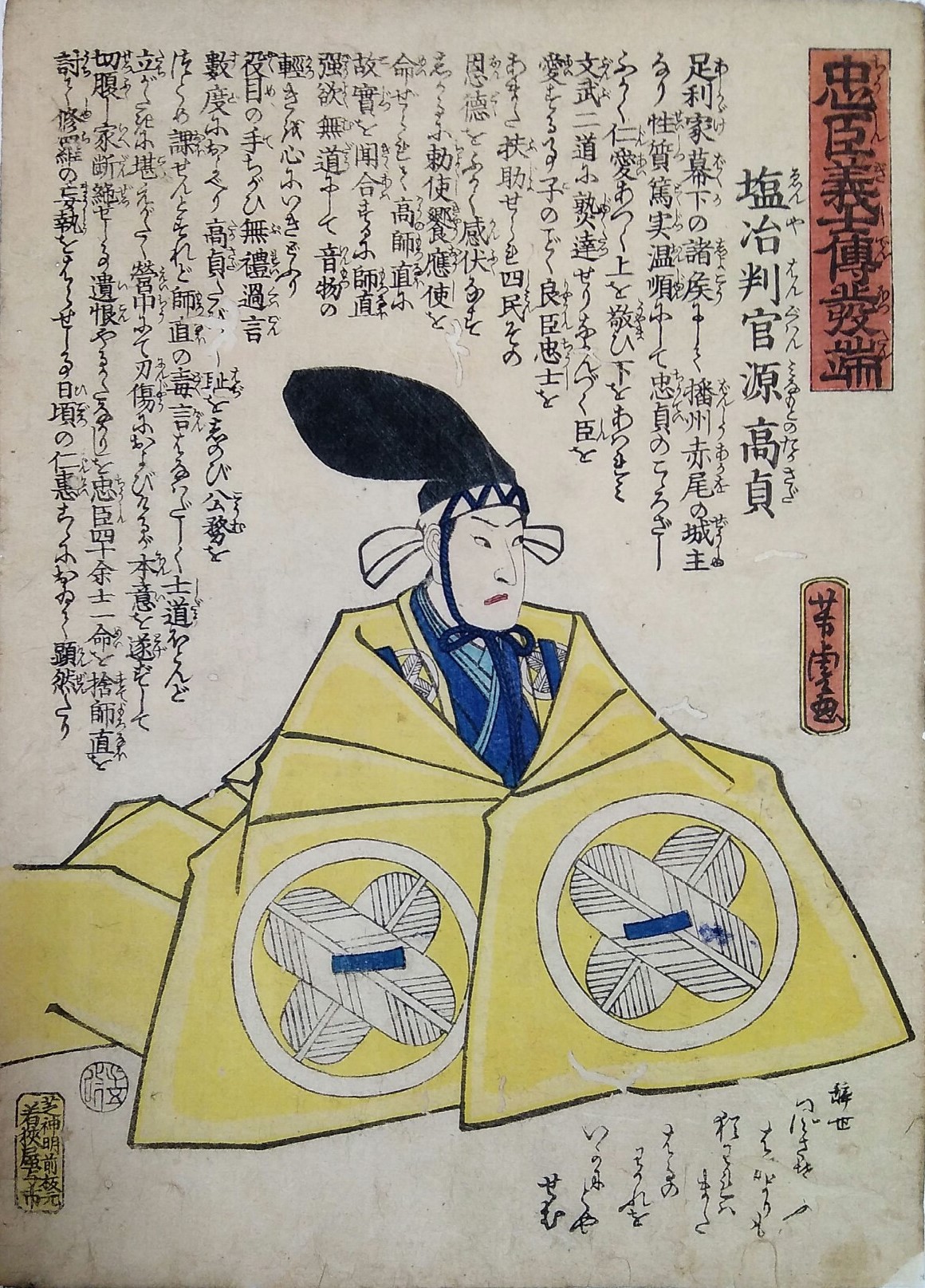
Minamoto Takasada, was vassal of the Ashikaga clan who served as the lord of Akao Castle in Harima Province. Remembered for his unwavering loyalty and steadfast sincerity, he also was deeply committed to the virtues of loyalty and benevolence.
He excelled in both scholarship and martial arts. He loved his loyal and virtuous retainers as if they were his own children, providing abundant support to many of them.
One day, he was tasked with entertaining and assisting imperial messengers and ordered to consult with Kō no Moronao about matters of protocol. Moronao displayed strong greed and treated the importance of the occasion lightly. His words and actions were often
disrespectful and crossed the boundaries of decorum on several occasions.
Takasada tries to overcome his shame and performs his official duties, but Moronao`s poisonous words were so harsh that he was unable to bear it anymore and ended up trying to stab Moronao, failing in killing him. Then he was then arrested and sentenced to
commit seppuku.
Then the story of the 40 loyal retainers follows…
Actually, Moronao was a warrior from the 14th century associated with the Ashikaga clan, known for his violence, greed, and lewdness. His name is used here instead of the on of Kira Yoshinaka because at the time when the Kana dehon Chūshingura was performed in theaters,
it was not allowed to use the real names of the characters involved in the incident. The same applies to the Takasada, who is probably referring to Asano Naganori.
USD$ 95.00