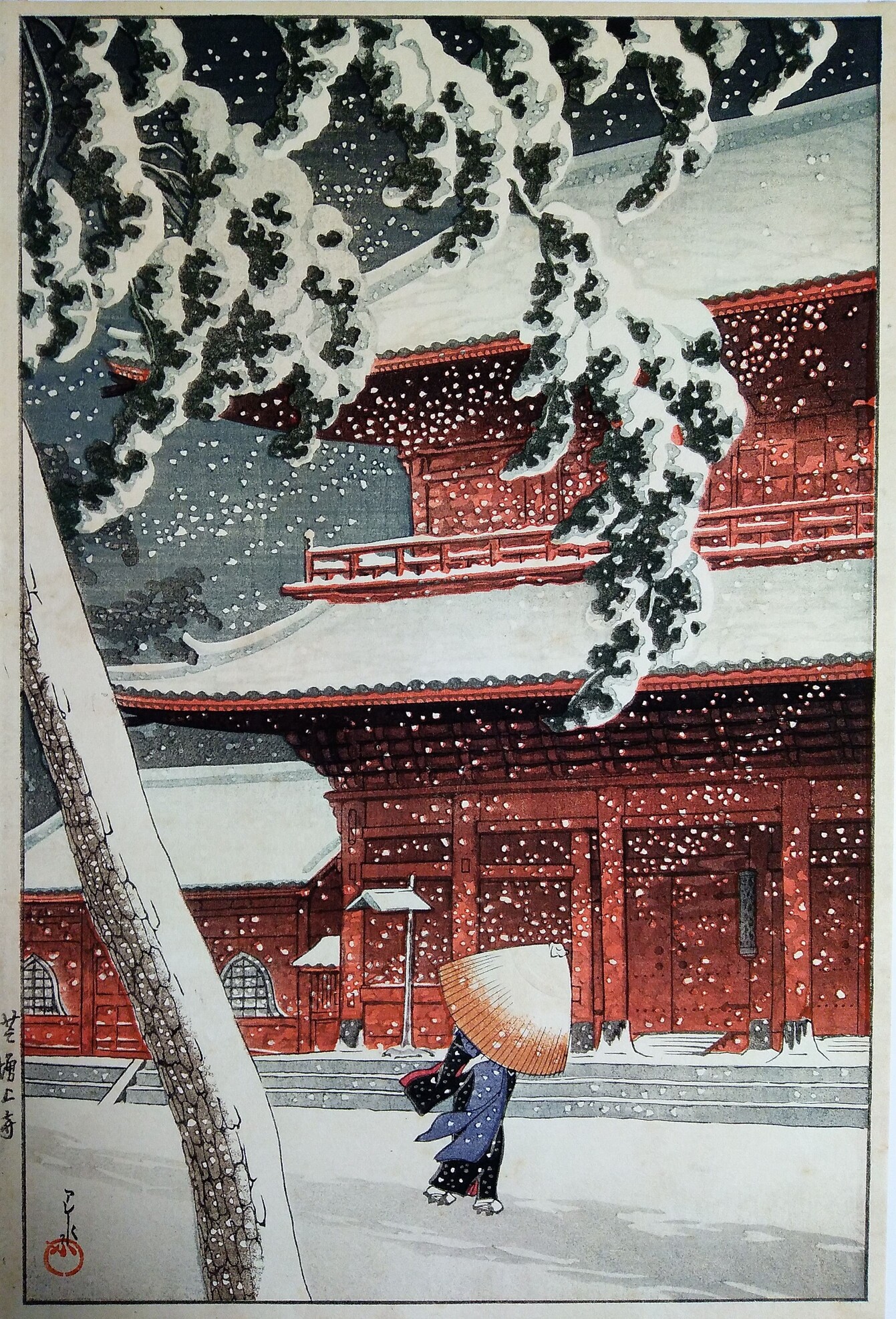
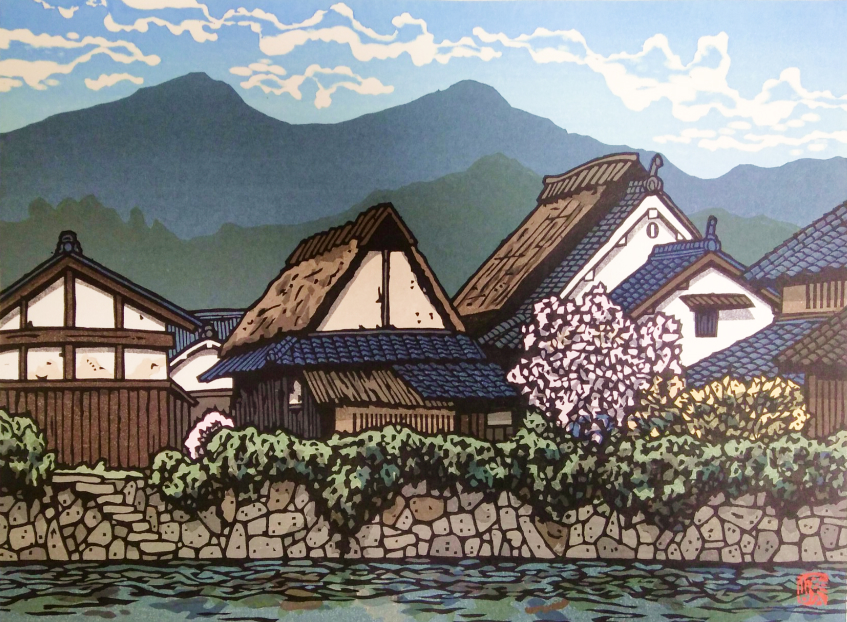
Kawase Hasui
1883 ~ 1957Hasui Kawase, born Bunjirō Kawase in 1883 in Tokyo, was one of the leading artists of the shin-hanga movement. After initially studying Western-style painting under Okada Saburōsuke,
he became a pupil of the Nihonga master Kaburaki Kiyokata, who gave him the art name Hasui. Following the collapse of his family`s business, he devoted himself entirely to art.
Hasui is best known for his atmospheric landscape prints depicting both famous and lesser-known rural and urban scenes throughout Japan. He traveled extensively across the country, producing sketches and watercolors
that later served as the basis for his woodblock prints. His works evoke nostalgia for traditional Japan while celebrating the beauty of nature, and he became particularly renowned for his masterful depictions of snow,
rain, and nighttime landscapes.
Most of his prints were published by Shōzaburō Watanabe, the principal publisher of the shin-hanga movement. During the Great Kantō Earthquake of 1923, Hasui lost nearly 190 sketchbooks and many woodblocks, yet he continued
to create new works and remained highly productive throughout his career.
In 1953, the Japanese government commissioned him to produce "Snow at Zojoji Temple" as part of a project to preserve traditional woodblock-printing techniques. In recognition of his exceptional contribution to Japanese printmaking,
Hasui was designated a Living National Treasure in 1956.